Register a Baby's Birth in Chiang Mai: Foreign Parents
Notify the birth to the registrar of the place of birth within 15 days. A late notice carries a fine not exceeding one thousand baht. For use abroad the Thai certificate needs an English translation signed by the translator, and Department of Consular Affairs legalisation, which Chiang Mai offers by online booking.
On this page
The clock starts at birth. A parent notifies the registrar of the locality where the child was born within 15 days. The name is given at the same time. After that comes a chain of paperwork for use abroad.
Step 1: notify the birth within 15 days
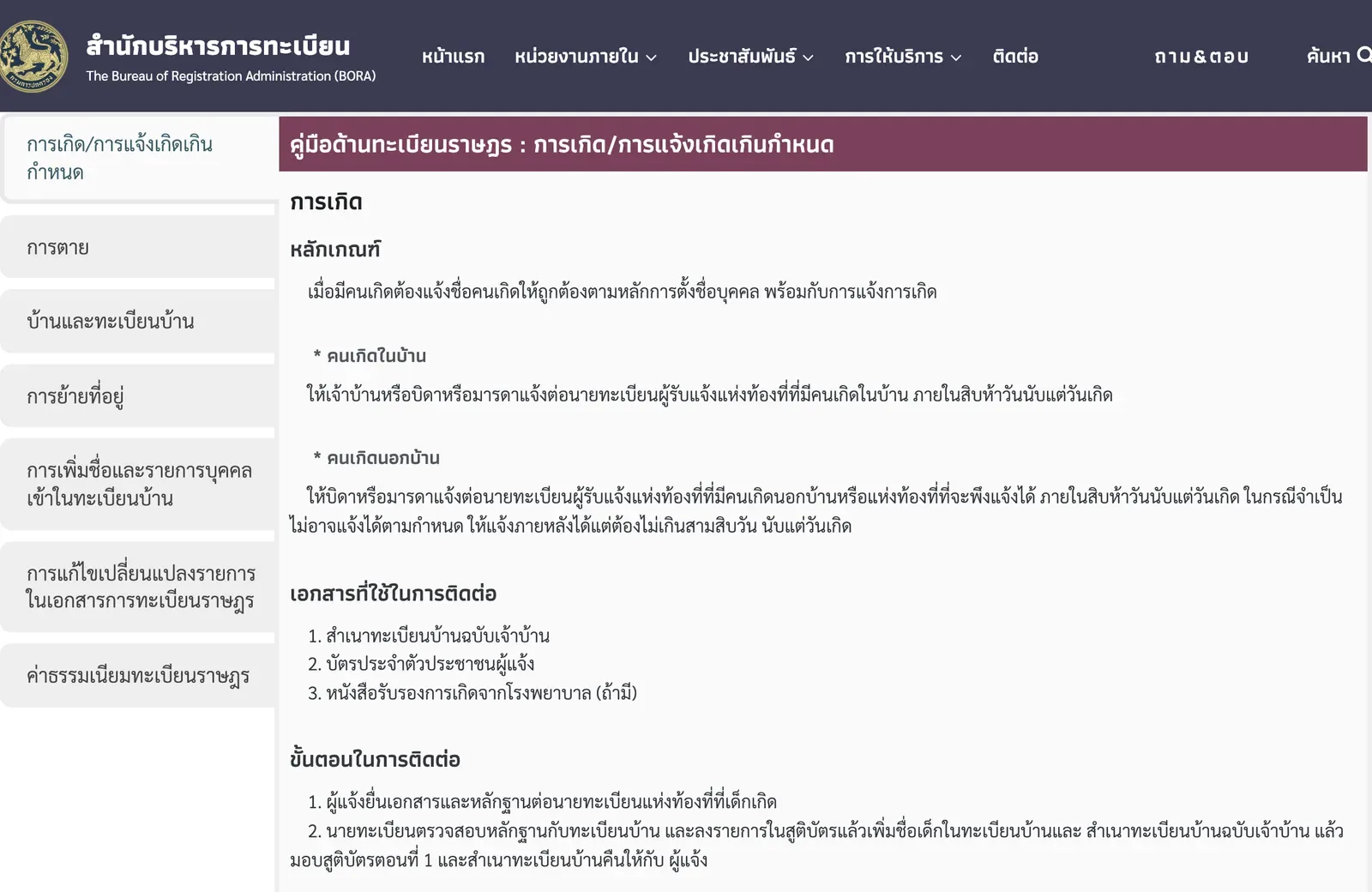
The registration bureau’s manual says a parent notifies the registrar of the locality within 15 days for a birth outside a house, such as in a hospital. If the deadline cannot be met, the parent can notify later but no more than thirty days from birth. For a birth at home, the head of the house or a parent notifies within 15 days.
A birth notified after the 15 days carries a fine not exceeding one thousand baht. The notice goes to the registrar of the locality where the child was born. The manual lists a hospital birth certificate, if available, among the documents.
The manual’s own document list names Thai papers, and no official list for two foreign parents was found. Go to the district office of the birth place with both passports, the marriage certificate if you have one and the hospital certificate. The registrar says what else it needs.
The hospital rule from September 2026
On 16 September 2026 the Ministry of Public Health met private hospitals on rules for the hospital birth certificate. The four guidelines are stated for births in a facility with a foreign mother and a Thai father.
Under guideline 4, a hospital must not facilitate registering the birth at the district office in the family’s place. The parents or the house head do it themselves. The guidelines name a foreign mother and Thai father only, but the manual already puts the notice on a parent, so a foreign couple should plan to go in person.
Step 2: the Thai certificate
Birth certificates are issued after the birth is registered. They carry the Thai calendar year, which is the Gregorian year plus 543.
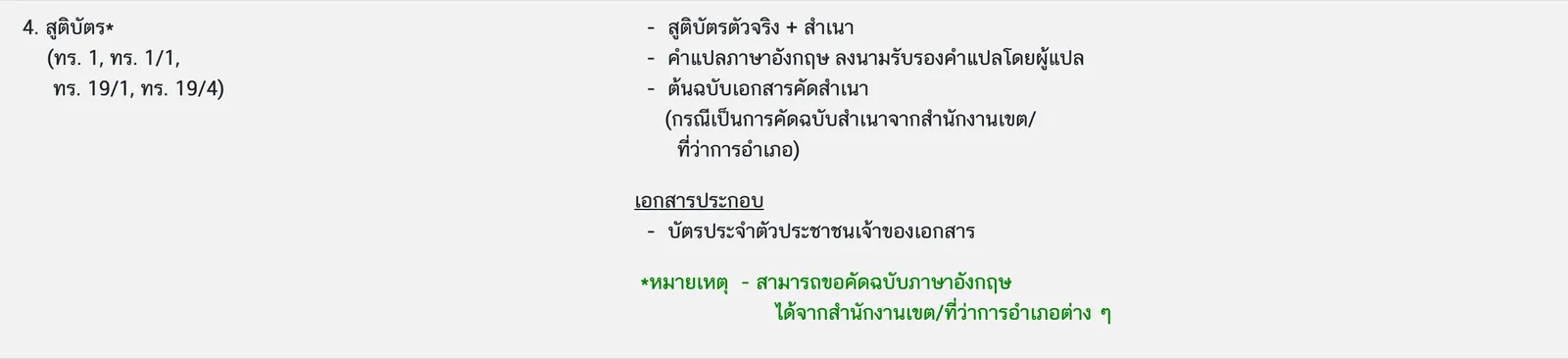
The Department of Consular Affairs accepts the Thai birth certificate under several form codes for legalisation. Ask the district office for an English copy when you collect it: registration documents copied in English there need no separate translation before legalisation.
Step 3: translation and legalisation in Chiang Mai
For legalisation the Department asks for the original and a copy, plus an English translation signed by the translator, unless you hold the English copy from the district office. The normal fee is THB 200 per legalisation seal, with the document returned within 2 working days. Fees are not refunded. A case sent to another Thai agency for checking takes up to 45 days.
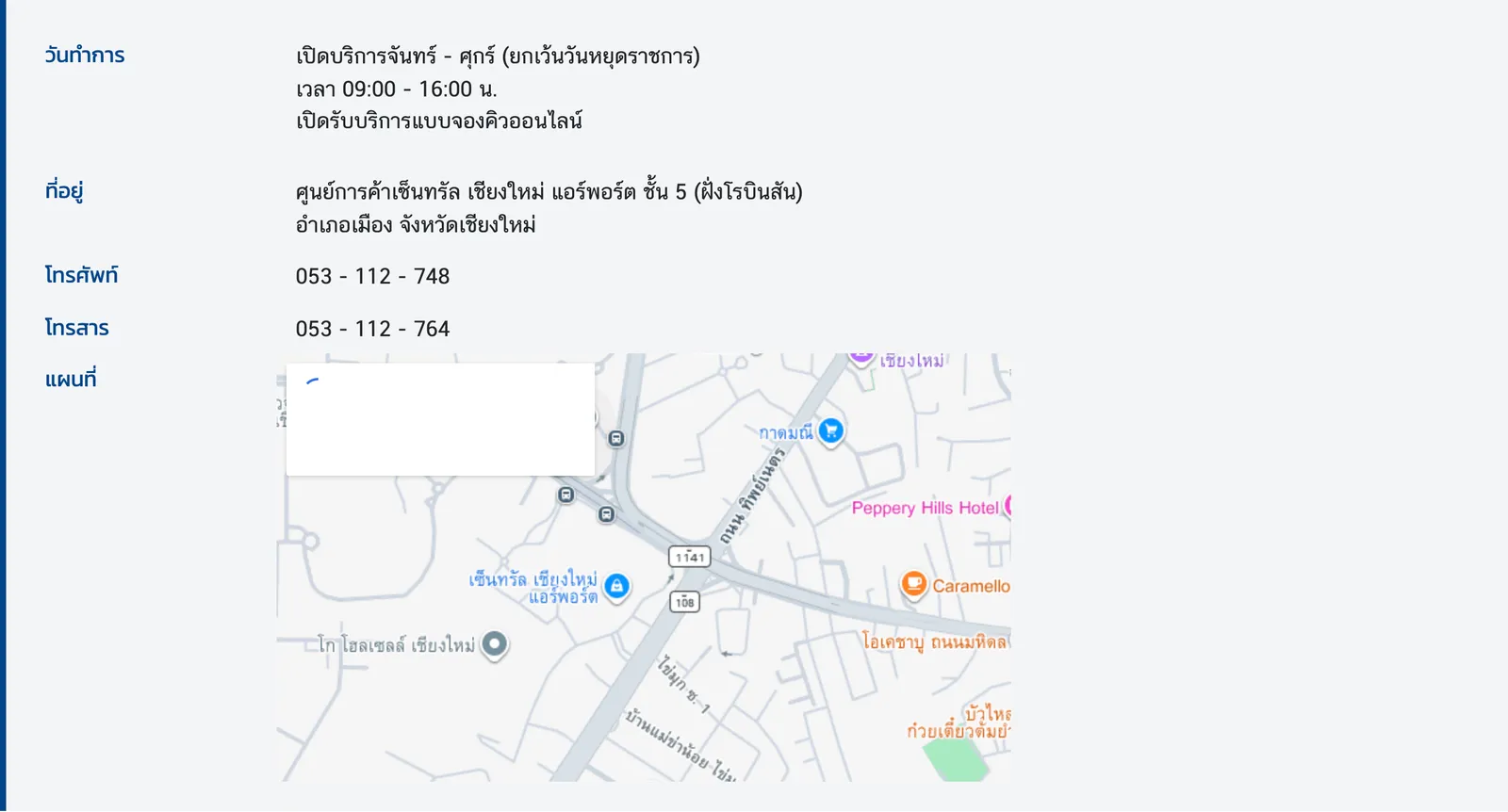
The Chiang Mai legalisation point is at Central Chiang Mai Airport, 5th floor, Robinson side. It is open Monday to Friday except public holidays, 09:00 to 16:00.
Service is by online booking, once per week per person. For a failed booking or an urgent case, call 091-723-3604 on working days. The point’s own telephone is 053 112 748.
9, 9, 1 หมู่ที่ 3, Mueang Chiang Mai District, Chiang Mai 50200, Thailand · Open in Google Maps (opens in a new tab)


Step 4: your embassy and the passport
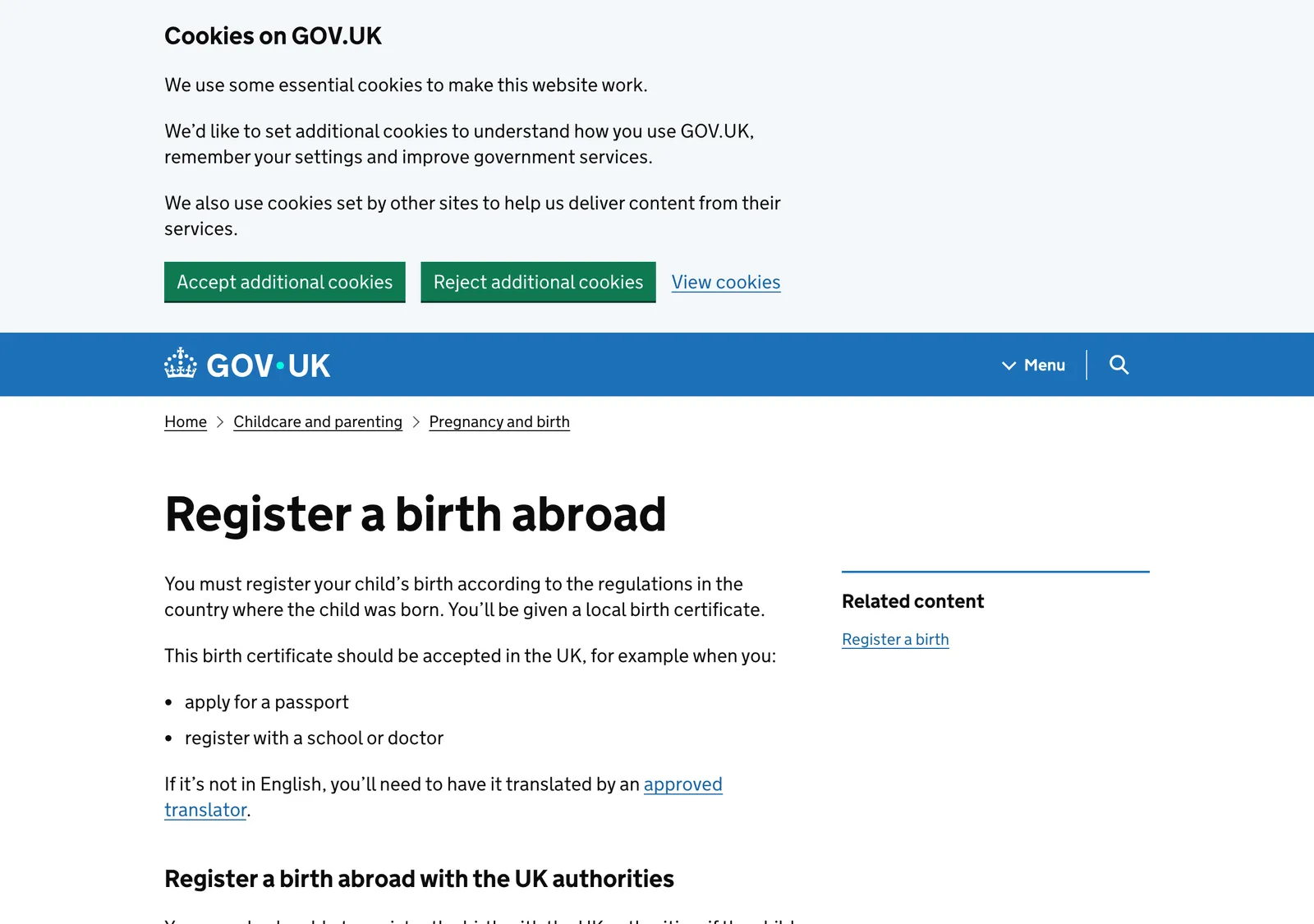
The embassy step depends on your country. A birth abroad is registered under the rules of the country where the child was born, which gives a local certificate. Registering with the UK authorities is optional, and a UK passport can still be applied for without it. A certificate not in English needs an approved translator.
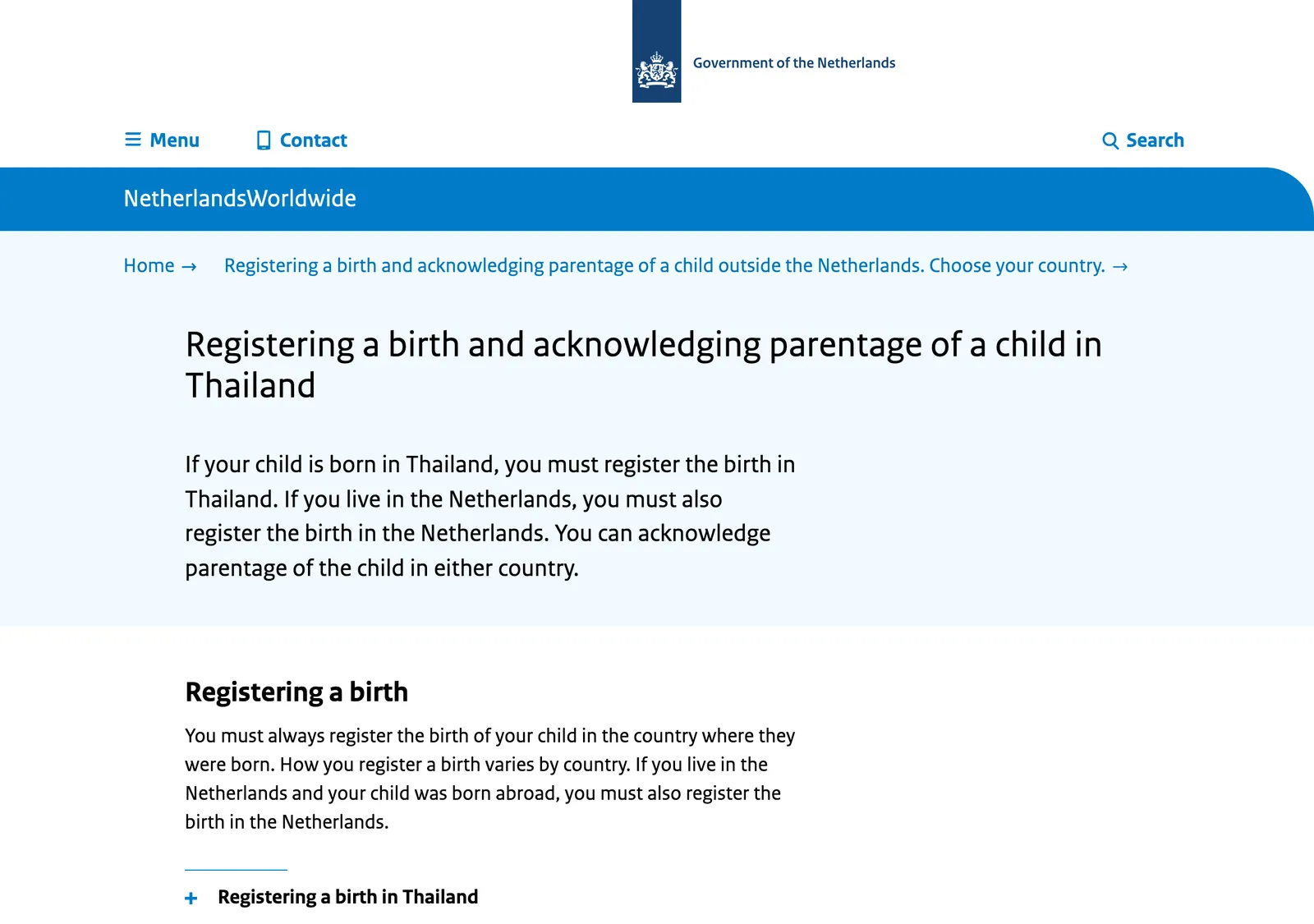
A Dutch child’s birth in Thailand is registered at the district office, and the Dutch embassy cannot register it. A Thai certificate used in the Netherlands is legalised first. Check the page of your own embassy for its sequence.
Unmarried parents and the father’s name
Parentage cannot be acknowledged in Thailand before the child is born, not even at an embassy. It can be acknowledged at the municipality where the child was born, or through a Thai court. This Dutch guidance is one country’s view; ask your embassy.
Is the baby Thai, and what visa follows
A person born in Thailand to alien parents does not acquire Thai nationality if, at birth, the lawful father, the unmarried father or the mother falls in a listed category. One category is a parent permitted to stay temporarily in the Kingdom. This is an unofficial English translation; check the Thai text.
No official procedure for a newborn’s first permit is published. The Immigration Bureau order sets a family extension: clause 2.20 covers the family of a foreigner permitted to stay temporarily, up to 1 year at a time.
A child must be unmarried, in the household and no more than 20 full years old. A copy of the birth certificate is accepted as proof of the relationship. Take the hospital certificate and the Thai certificate to Chiang Mai Immigration early.
The Non-Immigrant O visa for dependants is for entering from abroad: it is single entry and used within 90 days of issue. On arrival the holder gets an initial stay of up to 90 days. In Thailand the stay extends to 1 year, and the permit is valid for multiple entries. The dependent visa guide has the clauses and documents.
Related guides
- Chiang Mai Immigration Office: Address, Hours, Services
- English-Speaking Hospitals in Chiang Mai: Compared
- Health Insurance for Expats in Chiang Mai: What You Need
Photo credits
- Photos and clips uploaded to Google Maps (Central Chiangmai Airport on Google Maps (opens in a new tab)) by Central Chiangmai Airport, Waratida Udomsom.
Step by step
- Notify the birth within 15 daysA parent notifies the registrar of the locality of birth, giving the child's name with the notification.
- Collect the Thai certificateCertificates are issued after the birth is registered and show the Thai calendar year.
- Translate and legaliseBring the original and copy with an English translation signed by the translator to the Chiang Mai point, booked online.
- Register with your embassyFollow your own country's rules for the Thai certificate; the Dutch government requires legalisation first.
- Arrange the baby's visaThe dependant visa is single entry and used within 90 days of issue.
Not confirmed: No district-office document list for two foreign parents is published; the registration manual names Thai documents. Take both passports and the marriage certificate, and ask the office what else it wants. A newborn's first immigration permit is not described on any official page found; ask Chiang Mai Immigration early.
Reach readers planning life in Chiang Mai. Advertise → hello@chiangmaijao.com
Common questions
How soon must a birth be registered?
A parent notifies the registrar within 15 days of birth. If that is not possible, the notice can follow later but no more than thirty days from birth.
What is the fine for a late birth notice?
A birth notified after the 15 days carries a fine not exceeding one thousand baht.
Where is a birth registered?
At the registrar of the locality where the child was born, which is the district registration office. The Dutch government says the embassy cannot register a child born in Thailand.
Can the hospital register the baby for me?
Health ministry guidelines of 16 September 2026 say a hospital must not facilitate registering the birth at the district office; the parents or the house head do it themselves. They are stated for a foreign mother and Thai father.
Why does the certificate show a different year?
Thai certificates show the Thai calendar year, which is the Gregorian year plus 543.
Can I get the certificate in English?
Yes. An English version can be requested from district offices, and it needs no separate translation for legalisation. Otherwise an English translation signed by the translator is required.
Where in Chiang Mai is a certificate legalised?
At Central Chiang Mai Airport, 5th floor, Robinson side, with online booking.
Is the baby a Thai citizen?
Not when a parent is permitted to stay temporarily in the Kingdom.
Read next
Places in this guide

General information checked against the sources listed above, not legal advice for your situation. Rules and office practice change; confirm with the immigration office or a licensed adviser before you act. See how guides are checked.
Spotted an error? Report it.