Rental Contract in Chiang Mai: Clauses and Banned Terms
A landlord letting three or more units to an individual tenant must use the OCPB standard-form lease. A 12-month lease is inside it. It carries readable Thai text, two matching copies and a written record of the building's condition. A landlord with one or two units is outside it, so get a signed written lease.
On this page
Before you sign, check five things in the draft. They are the landlord’s unit count, the standard form, the banned terms, Thai text with two matching copies, and who files the immigration address notice. All five come from the Royal Gazette notification on residential building rental and its annexed lease form. Each check below ends with what to ask and what a bad answer looks like.
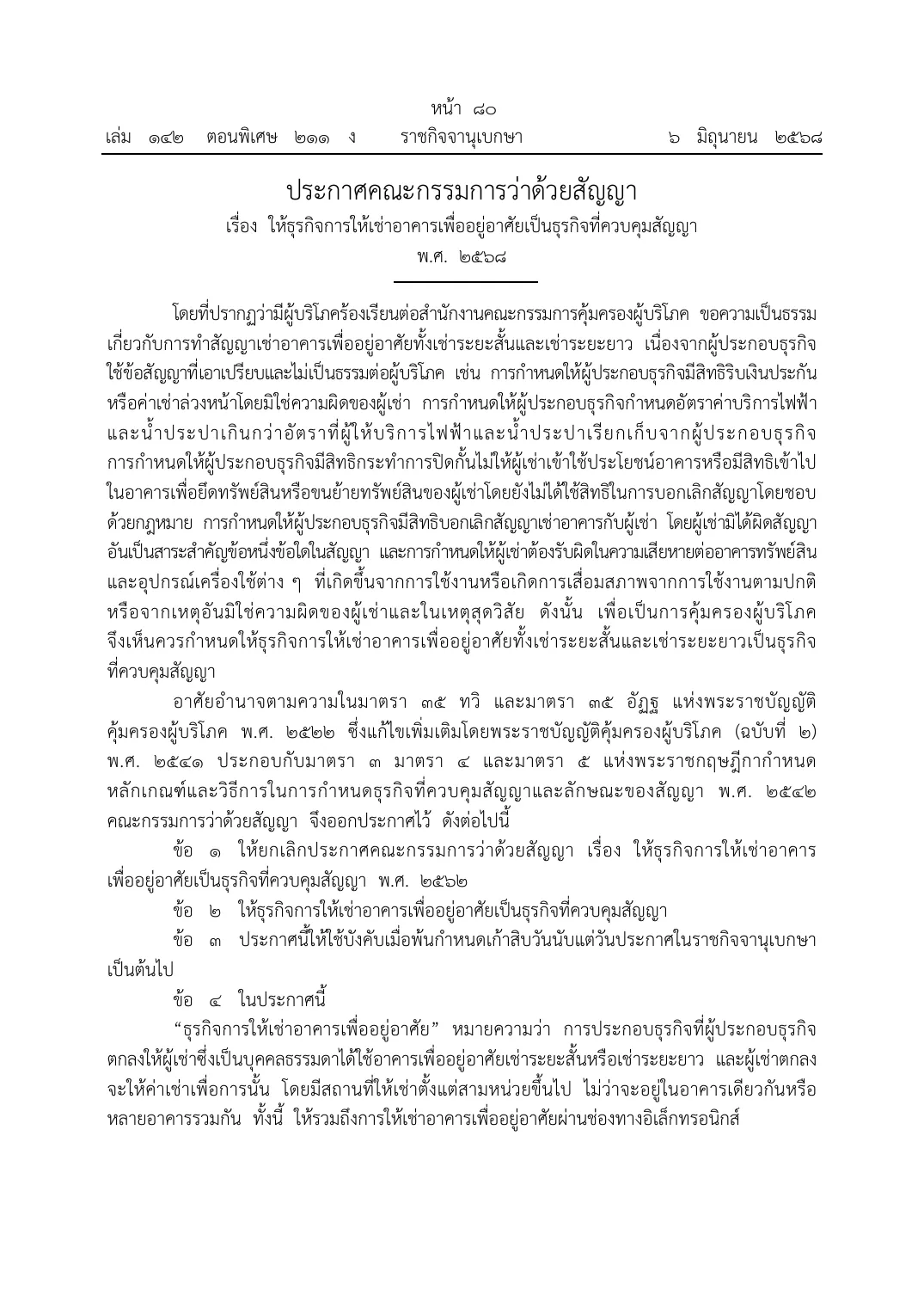
Does the lease rule cover your landlord?
The Contract Committee notification makes residential building rental a “contract-controlled business”. In plain terms, the government fixes the terms a covered lease must follow and lists terms it may not contain.
The notification appears in the Royal Gazette of 6 June 2025. It takes effect after ninety days from publication. The Office of the Consumer Protection Board (OCPB) says it has been in force since 4 September 2025.
Three words decide whether it covers your landlord:
- An operator is anyone who lets homes for rent and charges the tenant rent.
- A unit is a room, house, condominium unit, apartment or other residence let for living in.
- The tenant must be an individual, and a sub-tenant who is an individual counts.
Clause 4 covers an operator with three or more units, counted across one building or several. Dormitories under the dormitory law and hotels under the hotel law are not covered. Leases made under the earlier B.E. 2562 notification before the new one took effect stay in force until they end.
What to ask the landlord
Ask: “How many rooms or houses do you rent out in total, in all your buildings?” Three or more brings the landlord under the rule. That holds even if no single building has that many.
A vague answer, or one that counts only the building you are in, is a red flag.
If the landlord lets only one or two units
A landlord with one or two units is outside clause 4. The notification does not impose the standard form or the banned-terms list on that landlord.
The Civil Code still applies: a lease of immovable property cannot be enforced in court without written evidence signed by the party liable.
In one Supreme Court case, a landlord who claimed a higher rent than the written lease needed a document signed by the tenant to prove the increase. Get every term, including any later rent increase, into a signed document, and use the standard form’s clauses below as your checklist.
The standard lease: what each clause covers
Building and apartment leases must be drawn up on the standard-form contract. A lease an operator signs must use terms with the substance and conditions of the annexed form. A landlord’s own lease form is acceptable only if it keeps that substance.
A short-term lease, of no more than three years, uses form A. A typical 12-month rental is inside that limit. A lease of more than three years up to thirty years is a long-term lease with its own form. In one Supreme Court case, a tenant who stayed after a one-year lease ended was treated as holding a new lease with no fixed term, on the same rent.
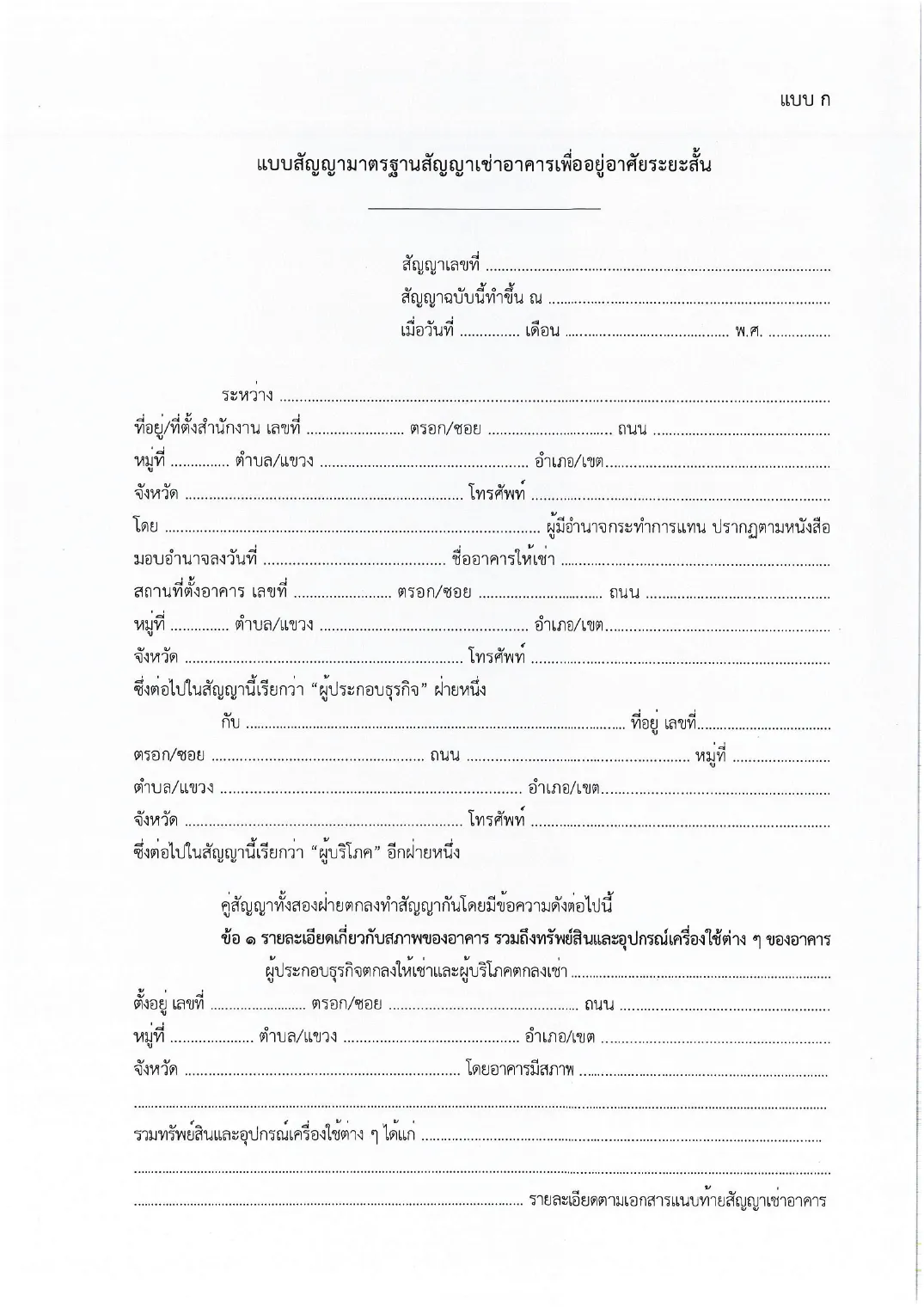
Form A runs to fourteen clauses. The ones a tenant checks first:
- Clause 1 records the condition of the building, its property and fittings.
- Clause 2 sets the rental period, with a start date and an end date.
- Clause 3 states the rent, the payment period and the payment method.
- Clause 7 has lines for the deposit and the advance rent.
- Clause 9 requires a written record of the building’s condition, attached to the lease, with one copy for the tenant.
Rent, utilities and service charges
Clause 4 has lines for the utility rates at signing: electricity, water, telephone or internet and other utilities. Clause 5 lets those rates change when the utility provider raises or cuts them, with the provider giving advance notice.
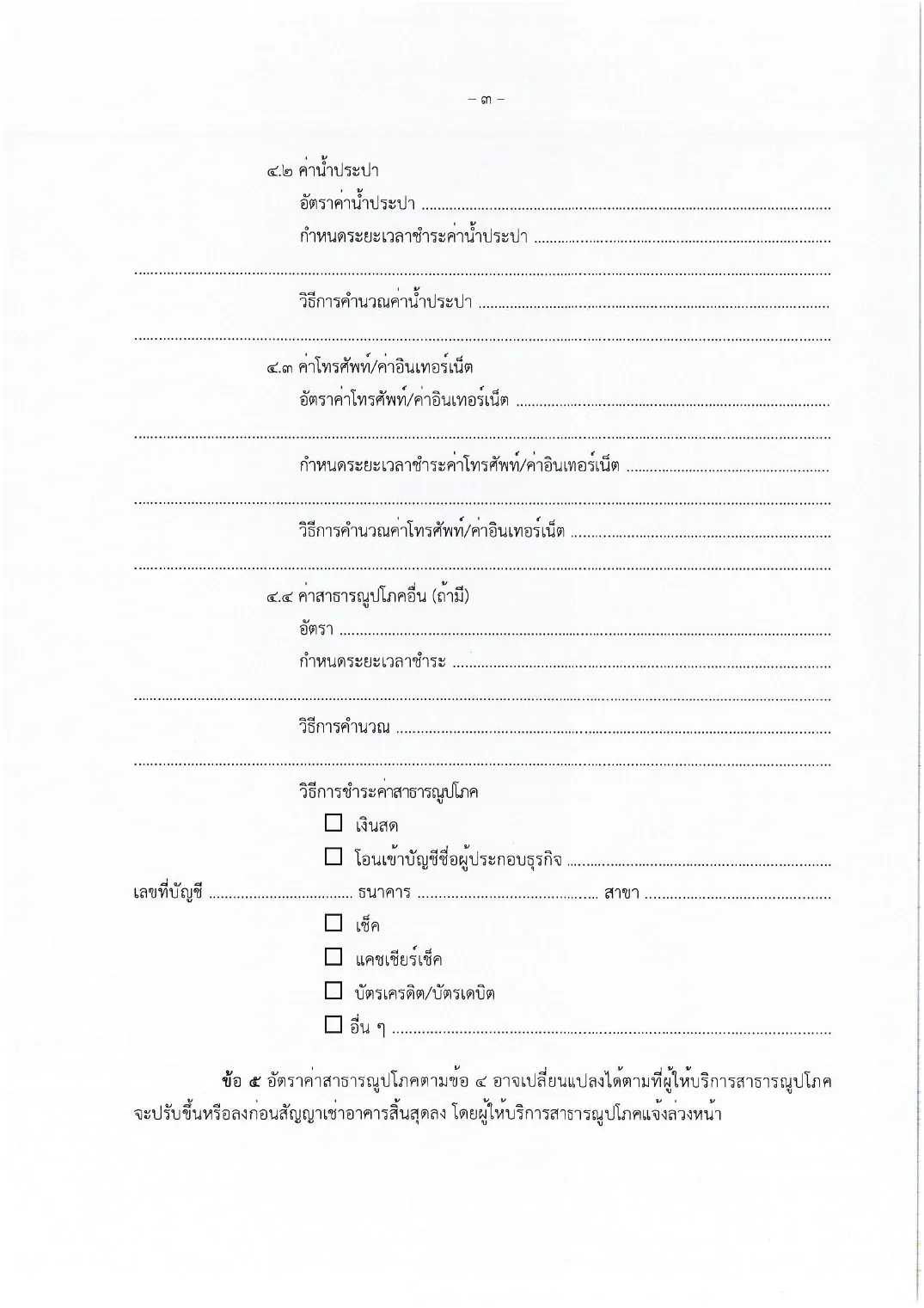
Clause 6 limits service charges to what the operator actually paid and had reasonable grounds to pay. Clause 8 requires the operator to send the invoice at least three days before the payment date. The tenant may check the charges.
Electricity and water rates are covered in landlord electricity and water prices.
Terms a lease may not contain
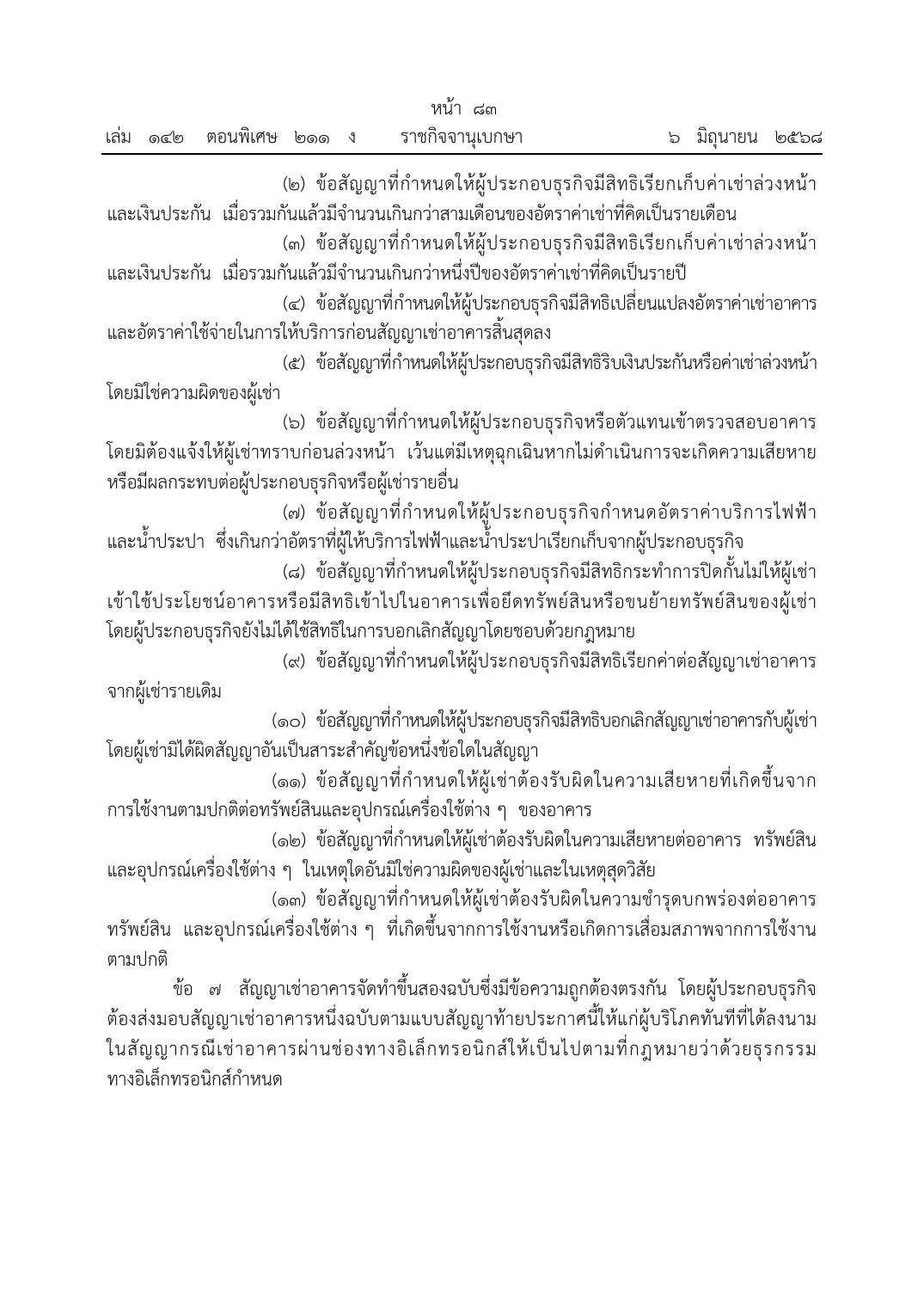
Clause 6 bars these terms from leases on the annexed forms. Read the draft against the list.
ข้อสัญญาที่กำหนดให้ผู้ประกอบธุรกิจกำหนดอัตราค่าบริการไฟฟ้าและน้ำประปา ซึ่งเกินกว่าอัตราที่ผู้ให้บริการไฟฟ้าและน้ำประปาเรียกเก็บจากผู้ประกอบธุรกิจ
Editor’s translation: A contract term that lets the operator set electricity and water service rates above the rates the electricity and water utilities charge the operator.
Royal Gazette vol. 142, special part 211 ง, 6 June 2025, clause 6.1(6) (ข้อ ๖.๑ (๖))
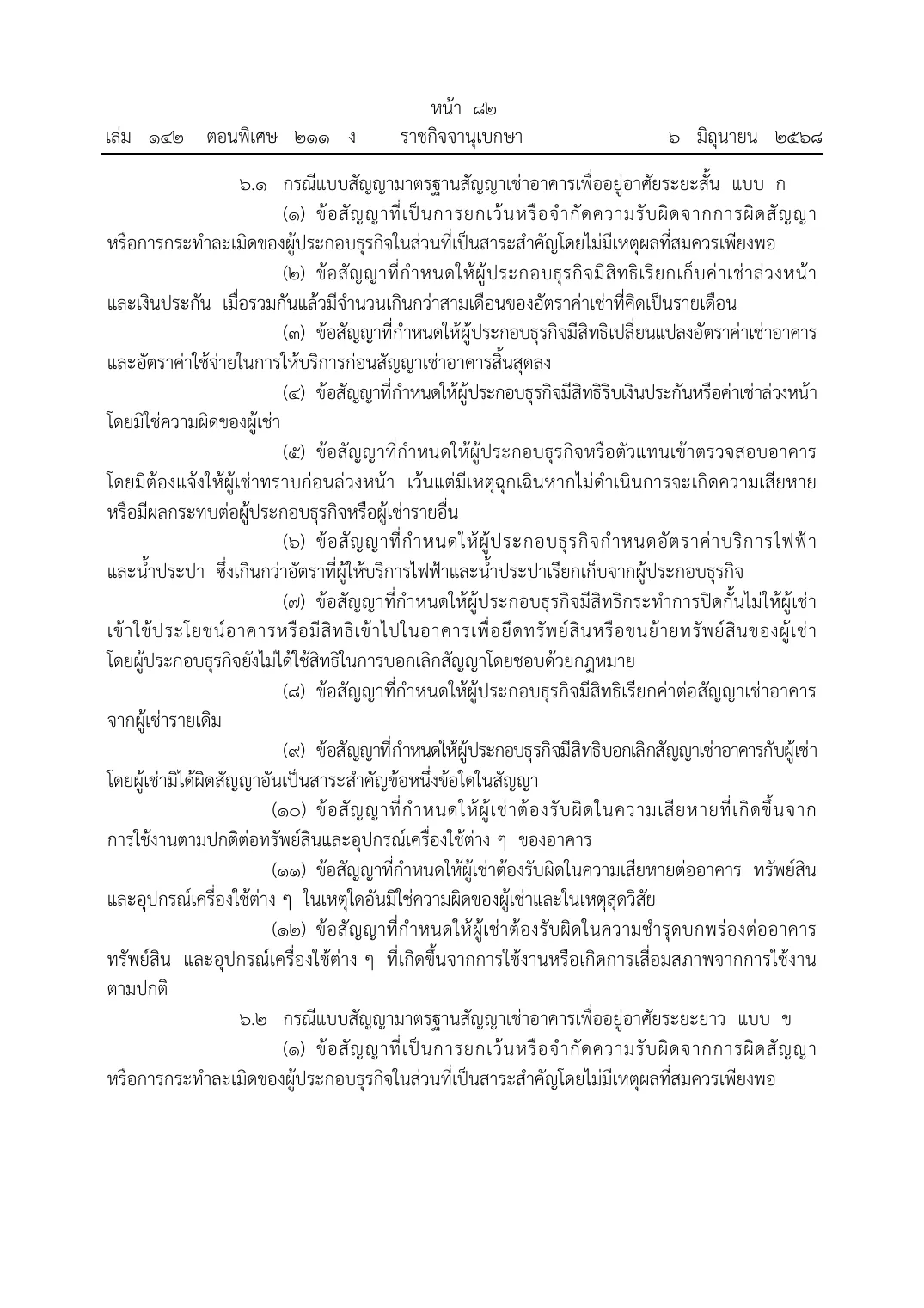
- Advance rent plus deposit above three months of monthly rent.
- Changing the rent and the service charges before the lease ends.
- Forfeiting the deposit or advance rent when the tenant is not at fault.
- Entering to inspect without prior notice, except in an emergency.
- Locking the tenant out, or entering to seize or remove belongings, before lawfully ending the lease.
- A fee to renew the lease charged to the existing tenant.
- Ending the lease when the tenant has not breached an essential term.
- Making the tenant liable for damage from normal use or for damage that is not the tenant’s fault or is caused by force majeure.
- Making the tenant liable for defects or wear from normal use.
The deposit rules in full are in the deposit guide.
Thai text, an English version and two copies
The lease an operator signs with a tenant must carry Thai text that can be seen and read clearly.
สัญญาเช่าอาคารเพื่ออยู่อาศัยที่ผู้ประกอบธุรกิจทำกับผู้เช่าต้องมีข้อความภาษาไทยที่สามารถเห็นและอ่านได้อย่างชัดเจน
Editor’s translation: A residential building lease that the operator makes with the tenant must have Thai-language text that can be seen and read clearly.
Royal Gazette vol. 142, special part 211 ง, 6 June 2025, clause 5 (ข้อ ๕)
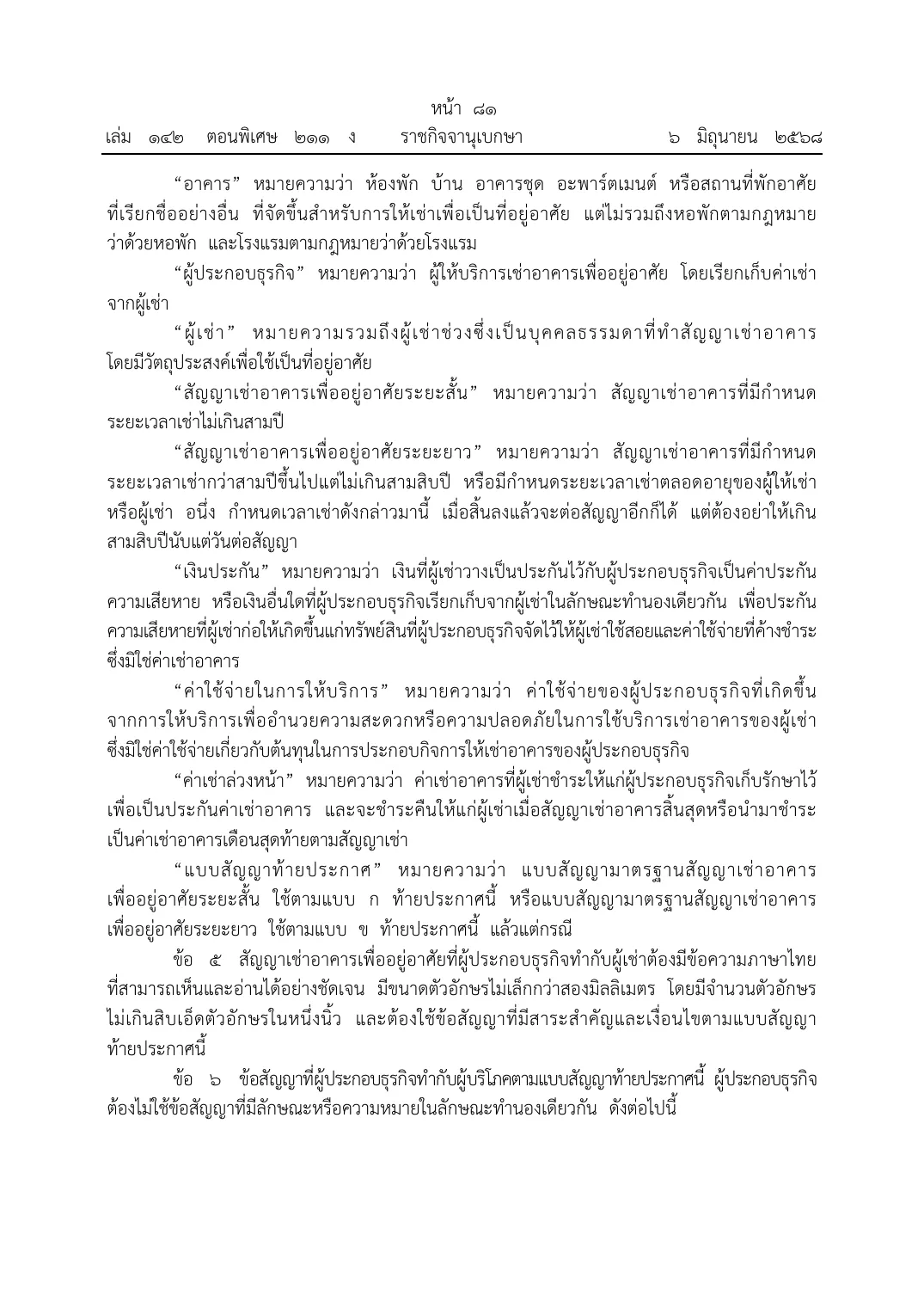
The Thai text is at least 2 millimetres tall, with no more than 11 characters per inch. A lease made through electronic channels carries Thai text too.
An English-only lease leaves out the Thai text that clause 5 requires. Nothing in the notification says whether that makes the lease void, or which version wins if a Thai and an English copy differ. So ask for the Thai text and an English copy together, and read the Thai text against the English line by line.
An English-only draft, or a Thai page too small to read, is a red flag.
The lease is drawn up in two matching copies. The operator hands the tenant one copy as soon as it is signed.
Ending the lease
A tenant on a fixed-term lease may end it early after living there at least half the term, with at least thirty days’ written notice and no arrears. The operator may end the lease only after a written notice giving the tenant at least thirty days to comply, and the tenant failing to do so.
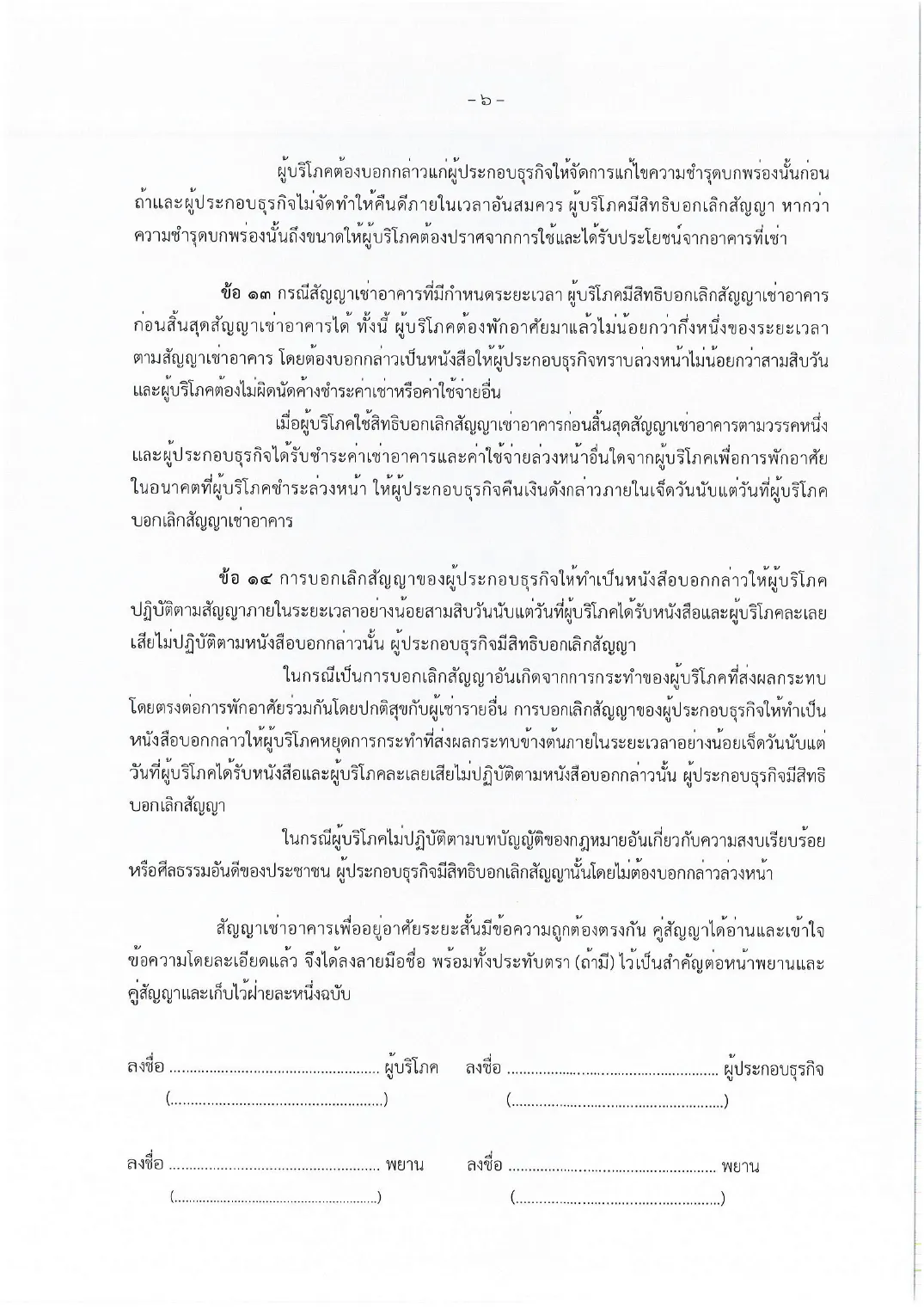
Form A also makes the operator responsible for all necessary repairs of defects during the rental period. The tenant looks after the building and its fittings as a prudent person would and carries out small repairs. If the operator returns the deposit late, see the deposit guide.
The immigration address notice (TM30)
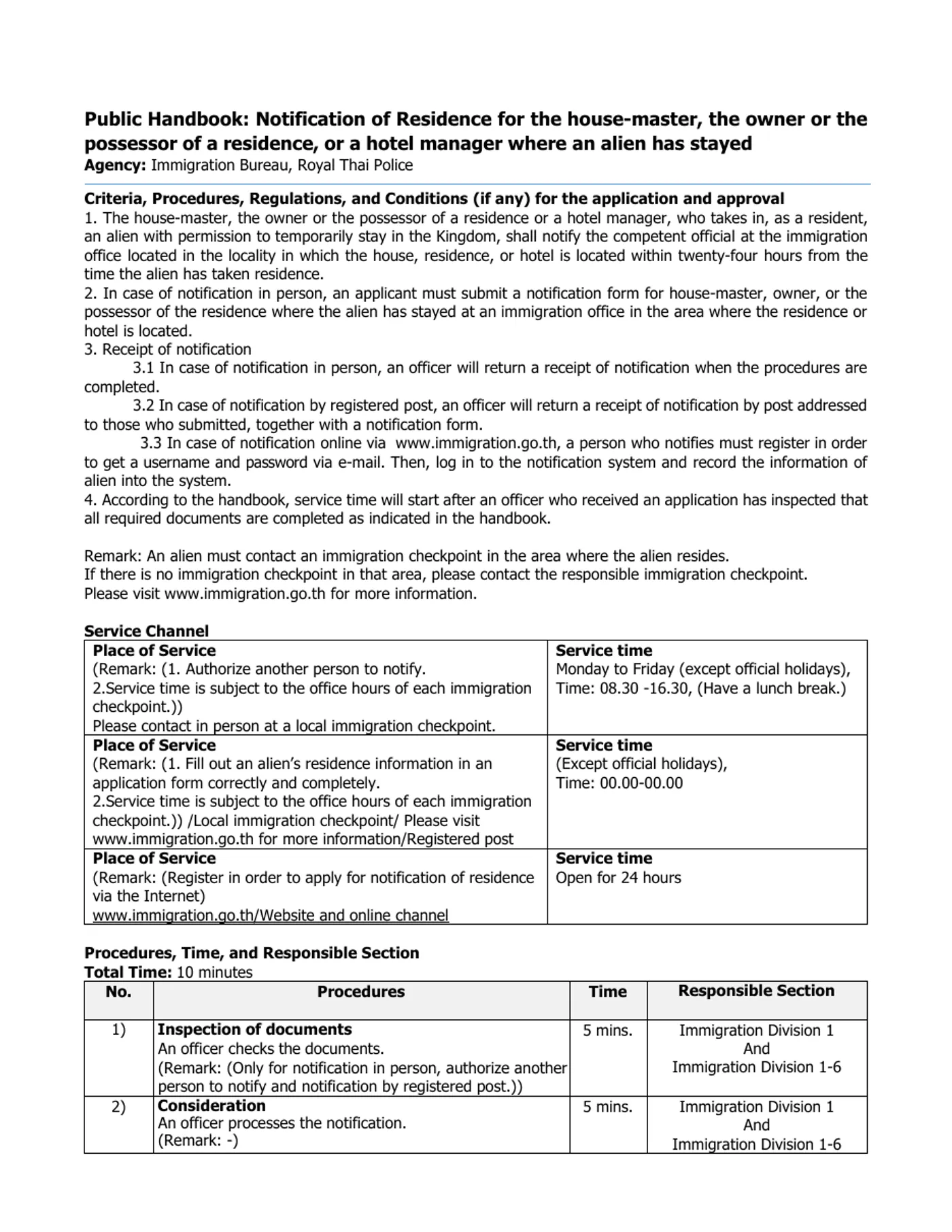
The TM30 is the notice that tells immigration where a foreigner is staying. The landlord, owner or other person in charge of the residence files it within 24 hours of the foreigner taking up residence. Section 38 puts that duty on the owner side, not on the foreigner. Failing to notify carries a fine of up to THB 2,000.
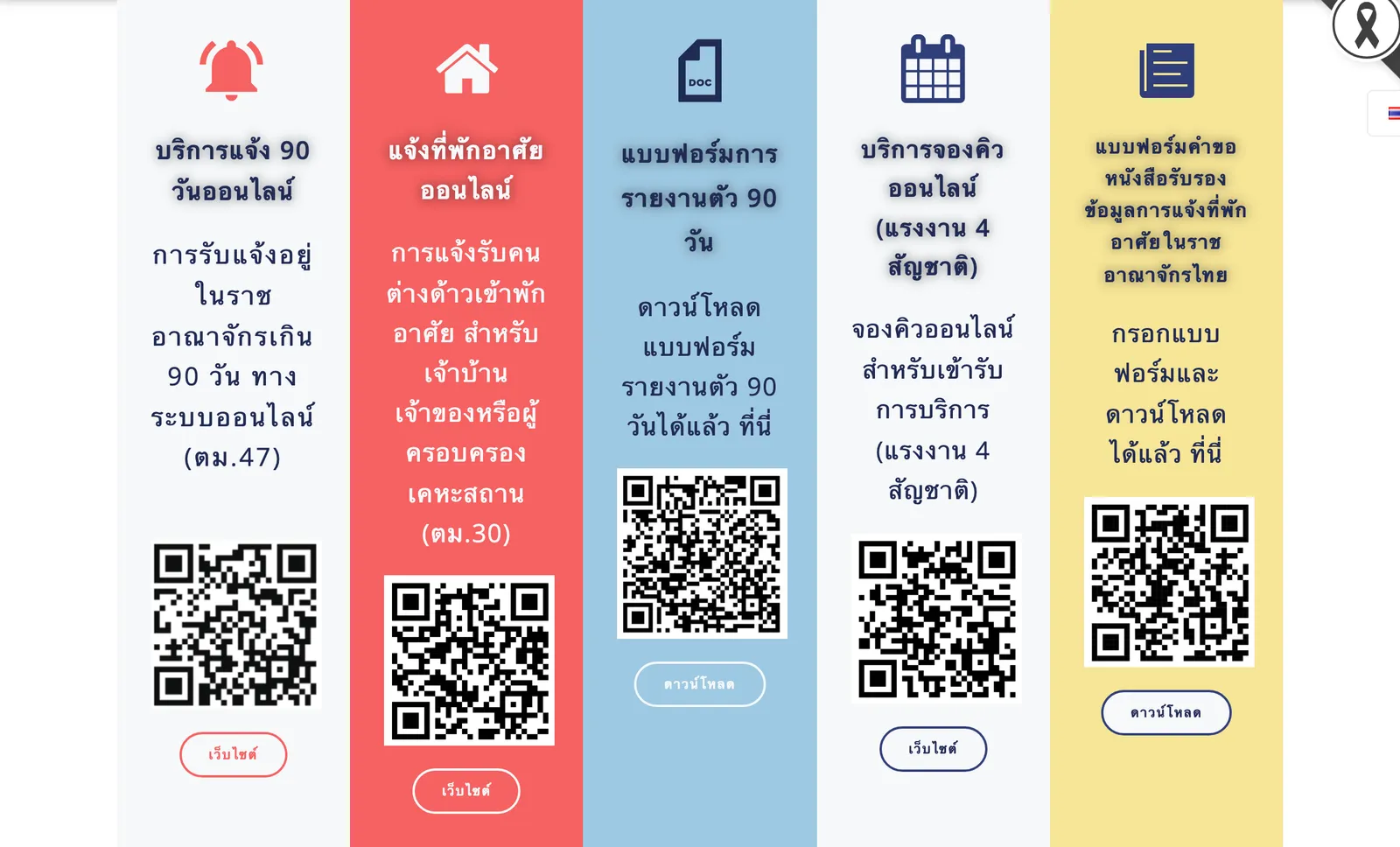
The notification can be filed in person, by registered post, or online after registering for a username and password. Chiang Mai Immigration links an online TM30 service for the person in charge of the residence.
The standard form has no clause on this, so ask the landlord to add a line saying who files and that you get a copy of the receipt. An answer that the foreigner files it is a red flag. The full procedure is in the TM30 guide.
Before you sign
| Ask | Red flag |
|---|---|
| “How many rooms or houses do you rent out in total?” | A vague answer, or one that counts only your building |
| “Can I see the standard-form lease?” | A landlord’s own contract with a banned term in it |
| “Does the draft have forfeiture without fault, entry without notice or a utility markup?” | Any of them is in the draft |
| “Where is the condition record?” | None attached, or only the landlord keeps a copy |
| “Is there Thai text, and does each side sign two copies?” | English only, or one copy kept by the landlord |
| “Who files the TM30, and will you add a line to the lease?” | “The foreigner files it” |
If the landlord will not change a banned term, the OCPB hotline, 1166, gives advice to tenants exploited under a residential lease. For the wider move-in picture, see Rent an Apartment in Chiang Mai.
Step by step
- Ask how many units the landlord letsAsk: how many rooms or houses do you rent out in total? Three or more, in one building or several, brings the landlord under the rule.
- Ask for the standard formBuilding and apartment leases must be drawn up on the standard-form contract. A landlord's own form must keep the substance of the standard one.
- Read the banned terms against the draftCheck for forfeiture without fault, inspection without notice and utility rates above the utility's own.
- Complete the condition recordThe operator prepares a written record of the building's condition, attaches it to the lease and gives you one copy.
- Sign two matching copiesThe lease is drawn up in two matching copies.
- Settle the address noticeThe duty to notify immigration within 24 hours sits with the landlord side, not the tenant. Ask the landlord to add a line saying who files.
Not confirmed: Nothing in the notification says which language version wins if a Thai and an English copy differ, or whether an English-only lease is void. Ask for the Thai text plus an English copy. The form has no clause on who files the address notice, so ask the landlord to add a line.
Reach readers planning life in Chiang Mai. Advertise → hello@chiangmaijao.com
Common questions
Does the standard lease have to be in Thai?
The lease an operator signs with a tenant must carry Thai text that can be seen and read clearly. The text is at least 2 millimetres tall, with no more than 11 characters per inch.
Can I get an English copy of the lease?
Ask for one, next to the Thai text. The Thai text is what clause 5 requires. Which version wins if the two differ is not stated, so check the Thai text against the English line by line.
How many copies of the lease are there?
The lease is drawn up in two matching copies. The operator hands the tenant one copy as soon as it is signed.
Which lease terms are banned?
The list includes advance rent plus deposit above three months of rent, forfeiture without tenant fault, inspection without notice and utility rates above the utility's own.
Can the landlord raise the rent during the lease?
A term letting the operator change the rent and the service charges before the lease ends is prohibited.
Can the landlord lock me out?
A term letting the operator lock the tenant out, or enter to seize belongings, before lawfully ending the lease is prohibited.
Who files my TM30?
The house-master, owner or possessor of the residence notifies immigration within 24 hours, not the foreigner.
Does the standard lease cover a normal 12-month rental?
Yes. A short-term lease is one of no more than three years, and it uses form A.
Does the standard form apply to a landlord with one or two rooms?
The notification covers an operator with three or more units. A one- or two-unit landlord is outside it. A lease of immovable property cannot be enforced in court without written evidence signed by the party liable.
What if I stay after the lease ends?
In one Supreme Court case, a tenant who stayed after a one-year lease ended was treated as holding a new lease with no fixed term and the same rent.
Where do I complain about an unfair lease term?
The OCPB hotline, 1166, gives advice to tenants exploited under a residential lease. The deposit guide covers the consumer-court route.
Does my old lease still count?
Leases made under the earlier B.E. 2562 notification before the new one took effect stay in force until they end.
Read next
General information checked against the sources listed above, not legal advice for your situation. Rules and office practice change; confirm with the immigration office or a licensed adviser before you act. See how guides are checked.
Spotted an error? Report it.