Chiang Mai Burning Season: Dates, PM2.5 and Whether to Leave
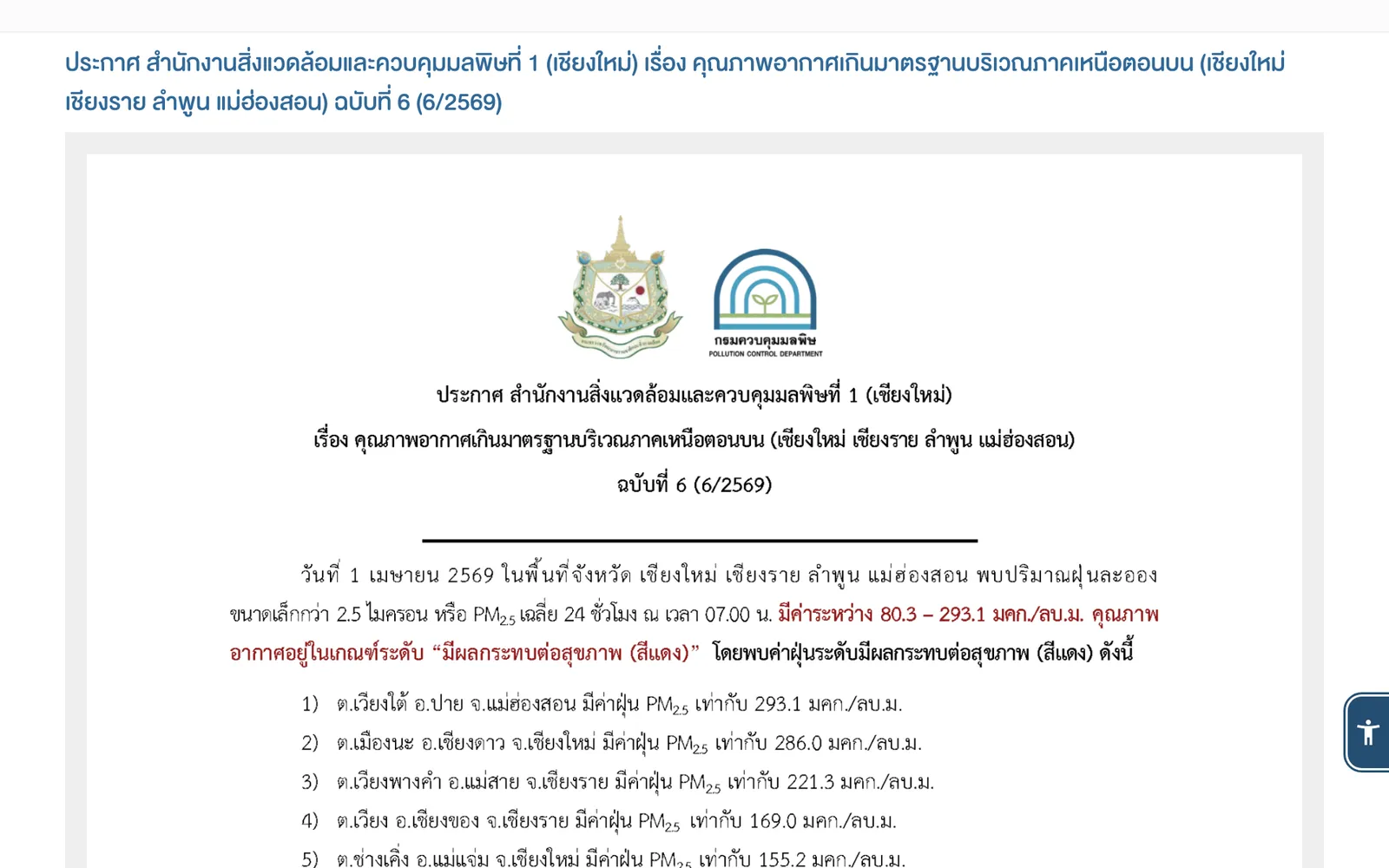
Chiang Mai's smoke season runs from about January to May. The 2026 "Chiang Mai does not burn" request ran from 1 January to 31 May, and Chang Phueak was in the red band from 29 March. The Thai 24-hour PM2.5 standard is 37.5 micrograms per cubic metre. At red, official advice is to stop outdoor activities.
The Thai 24-hour limit for PM2.5 is 37.5 micrograms per cubic metre. On 1 April 2026 the Pollution Control Department’s Chiang Mai office reported 110.3 at Chang Phueak, in the red band.
Quick answers:
When: the 2026 request ran 1 January to 31 May. Red readings came in late March and early April.
Why: forest fires, farmland burning and haze from across the border, trapped by calm weather.
What counts as bad: above 37.5 over 24 hours; red from 75.1.
What to do: check Air4Thai, stay indoors at red, and use a PM2.5 mask if you must go out.
When is burning season in Chiang Mai?
PM2.5 in the north, and in Bangkok’s surroundings, tends to rise at the start and end of every year. For Chiang Mai the window runs from January to May.
In 2026 the “Chiang Mai does not burn” request ran from 1 January to 31 May. Chang Phueak was in the red band for four days in a row from 29 March.
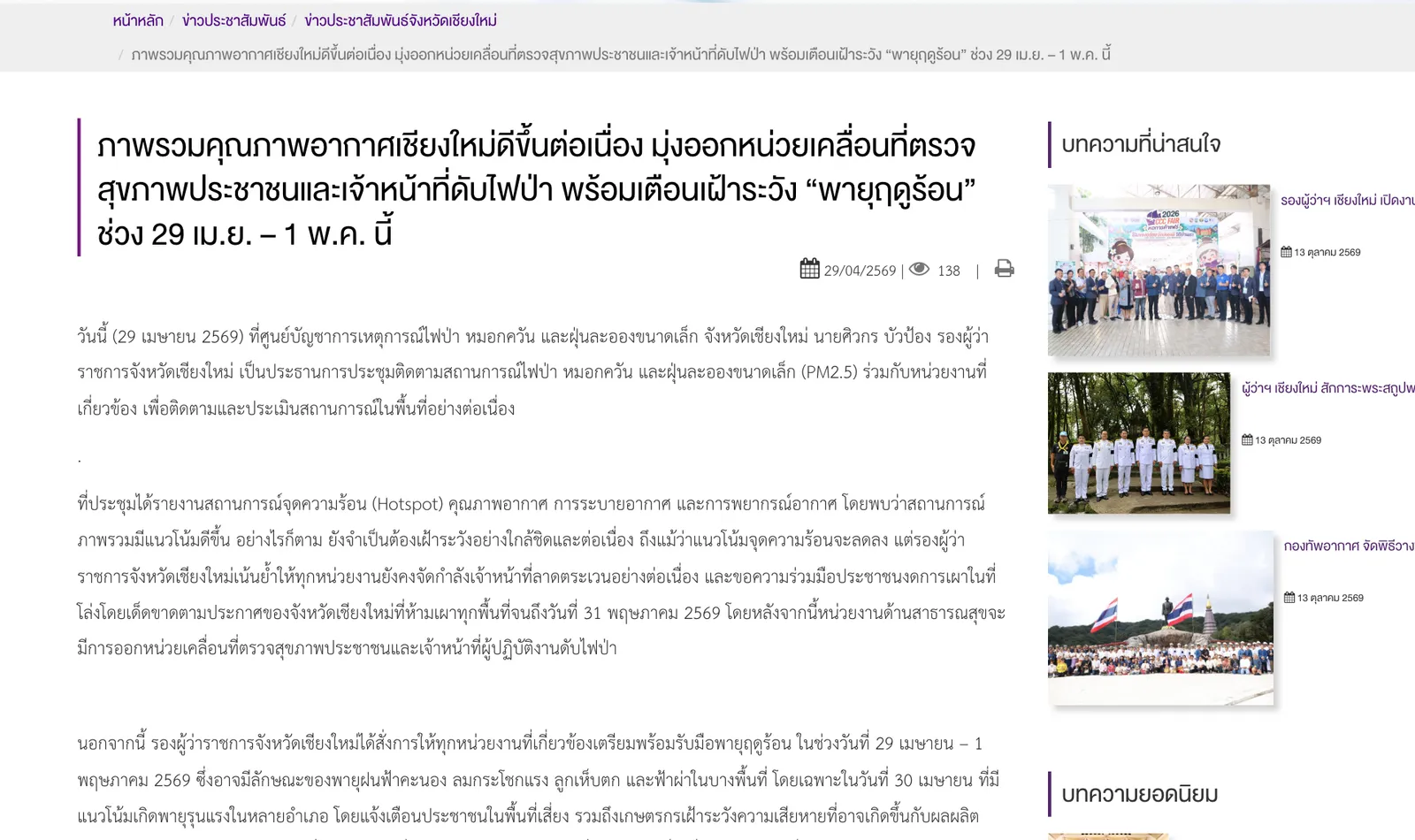
By 29 April the provincial meeting reported that the overall situation tended to improve.
The command centre stopped its daily PM2.5 situation reports on 15 May, when the Thai Meteorological Department declared the rainy season. That ended the reports, not the monitors: the Air4Thai feed still returned a City Hall reading on 14 October. The same meeting told the 16 districts that had been declared emergency disaster-assistance areas to prepare to announce the end of those areas.
How bad was it by place? On 1 April 2026 the PCD office listed 14 red readings across four provinces, six of them in Chiang Mai province. Chiang Dao’s Muang Na had 286.0, Mae Chaem’s Chang Kheng 155.2, Chang Phueak in the city 110.3, Si Phum 82.0 and Suthep 80.3. All are 24-hour averages in micrograms per cubic metre.
For a full season, the latest totals in the ministry document are from 2023. No 2026 totals were found. In the 17 northern provinces, the 24-hour PM2.5 average from 1 January to 31 May 2023 was 62 micrograms per cubic metre. The standard was exceeded on 112 days.
Why the air gets so bad
The ministry’s 2024 measures document lists forest fires, burning in farmland, transboundary haze, traffic and transport, and factories as sources.
Weather finishes the job. Early in the year, high pressure over Thailand brings closed air and calm wind, so dust does not disperse and builds up beyond the standard.
A 2020 Thairath report, reposted by the national environment policy office, describes the terrain of Chiang Mai’s urban area as basin-shaped. It lists burning of crop residue on plains and uplands, burning of rubbish, and burning of rotational-farming plots in the highlands to prepare planting. It also names haze from Myanmar, Laos, Cambodia and Vietnam.
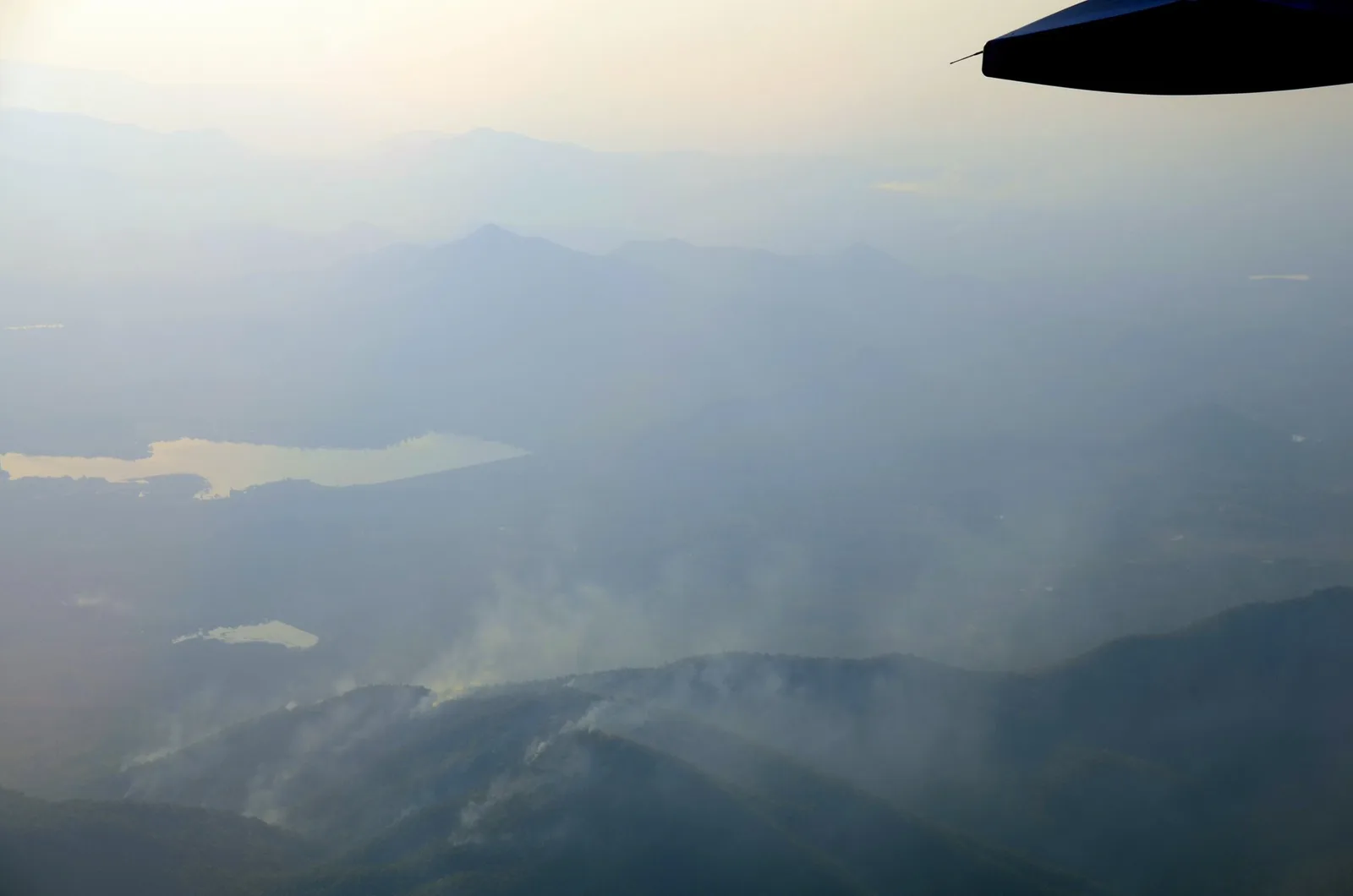
Smoke from mountain fires seen from a plane over northern Thailand.
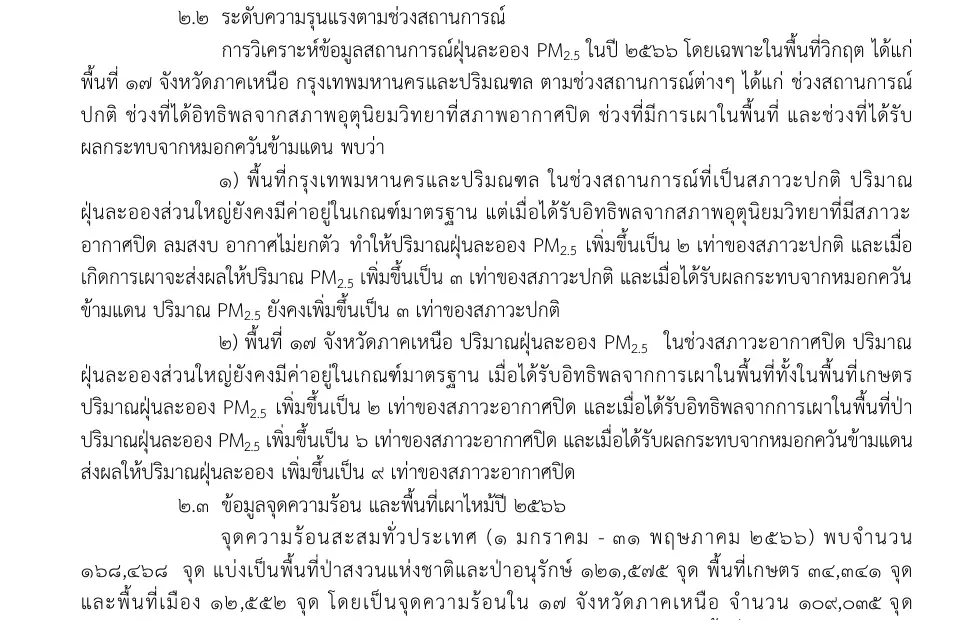
Thailand counted 168,468 hotspots from 1 January to 31 May 2023: 121,575 in national reserve and conservation forest, 34,341 in farmland and 12,552 in urban areas. The 17 northern provinces had 109,035 of them, and a burned area of 9,768,928 rai.
The type of burning matters. In the north, burning in farmland took PM2.5 to 2 times the closed-air level, forest burning to 6 times, and transboundary haze to 9 times.
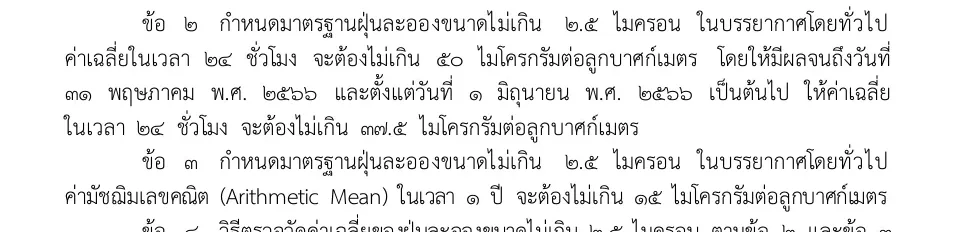
Editor’s translation: and from 1 June B.E. 2566 (2023) onward, the 24-hour average must not exceed 37.5 micrograms per cubic metre.
Royal Gazette vol. 139, special part 163 ง, 8 July 2022, clause 2 (ข้อ ๒)
The yearly standard is a mean of no more than 15 micrograms per cubic metre. An air quality index of 100 equals the standard.
The Thai index sets PM2.5 of 25.1 to 37.5 in the yellow band and 75.1 and above in the top red band. The Chang Phueak reading of 110.3 sits above that red threshold.
Chiang Mai office readings are 24-hour averages at 07:00. For the full band table and what each colour asks you to do, see how to read PM2.5 and AQI in Chiang Mai.
Two official texts describe the 2026 measure in different words, and both are correct about what they cover.
Ban: on 29 April 2026 the deputy governor asked people to stop open burning entirely, under the provincial announcement that bans burning in all areas until 31 May 2026. On 29 March the PR office had dated that ban to 1 January.
Request: the “Chiang Mai does not burn” campaign is a request running from 1 January to 31 May. It asks that no open burning of any kind take place, and that rubbish, twigs and leaves not be burned in community areas.
So the province announced a ban, and the public campaign is worded as a request. The practical rule is the same: do not burn anything outdoors from January to May. By 29 March officials had arrested and prosecuted 5 offenders. Last year followed the same pattern, with an absolute ban from 1 January to 15 May 2025.
The notice also names a provincial announcement on fuel-management zones and burn-control zones for fiscal year 2026, and asks for fuel-management bookings in the Fire-D/Burn check system.
What breaking it can cost
The penalty text of the 2026 announcement was not available. The Chiang Mai provincial police published this list for the 2025 ban; it is a police summary of general laws, so treat the figures as a guide.
Where you burn
Penalty listed by the police
Open air, causing a nuisance (Public Health Act)
Up to 3 months in jail or a fine of up to 25,000 baht, or both
Within 500 metres of a road, endangering traffic
A fine of up to 1,000 baht
Farmland, if the fire harms other people or property (Criminal Code Section 220)
Up to 7 years in jail and a fine of up to 140,000 baht, or both
National reserve forest
6 months to 5 years in jail and a fine of 5,000 to 50,000 baht
National parks and wildlife sanctuaries
4 to 20 years in jail and a fine of 400,000 to 2,000,000 baht, or both
To report burning, call the Chiang Mai police on 0-5311-2808 or 191, 24 hours a day.
How to protect yourself
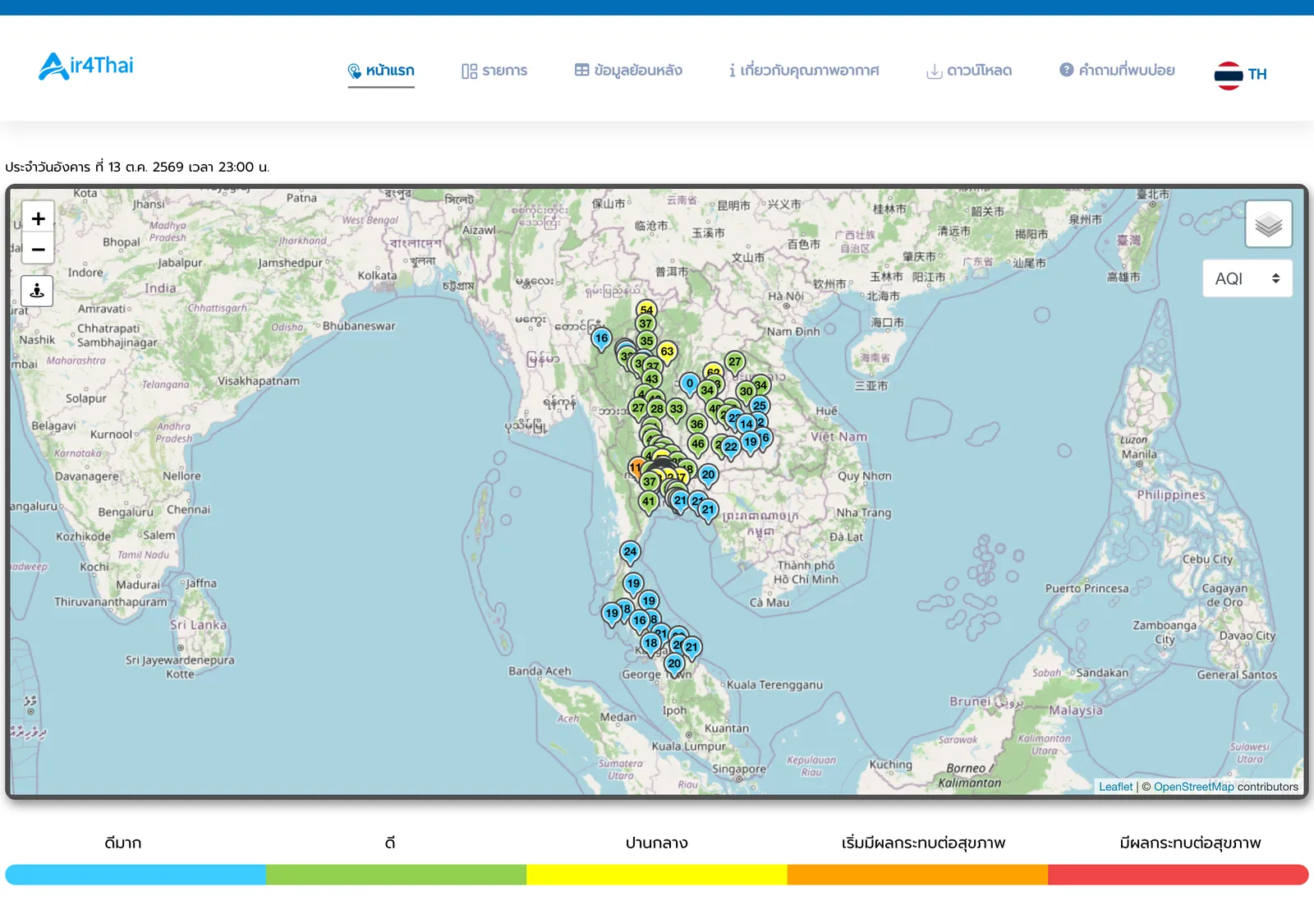
Watch the numbers first. The PCD Chiang Mai office names the Air4Thai website, air4thai.pcd.go.th, and the Air4Thai app for following air quality reports.
At red, the Pollution Control Department’s index tells everyone to stop outdoor activities. In its 1 April 2026 announcement, the Chiang Mai office asked people in the affected areas to avoid outdoor activities. If they must go out, it asked them to use a PM2.5 mask every time and limit strenuous exercise.
Watch your body too. Symptoms are cough, difficulty breathing and eye irritation, especially for people with underlying disease, children and the elderly; see a doctor quickly if symptoms appear.
The index defines at-risk people as those over 60, children aged 5 or under, pregnant women, and people with heart, blood-vessel or respiratory disease. At red, people with underlying disease should stay in an area safe from air pollution, have medicine and equipment ready, and follow their doctor’s advice strictly.
Masks, fit and indoor air have their own guides: mask and indoor steps and choosing an air purifier. People are asked to refrain from every kind of burning and from using vehicles with black smoke above the standard.
If you feel unwell
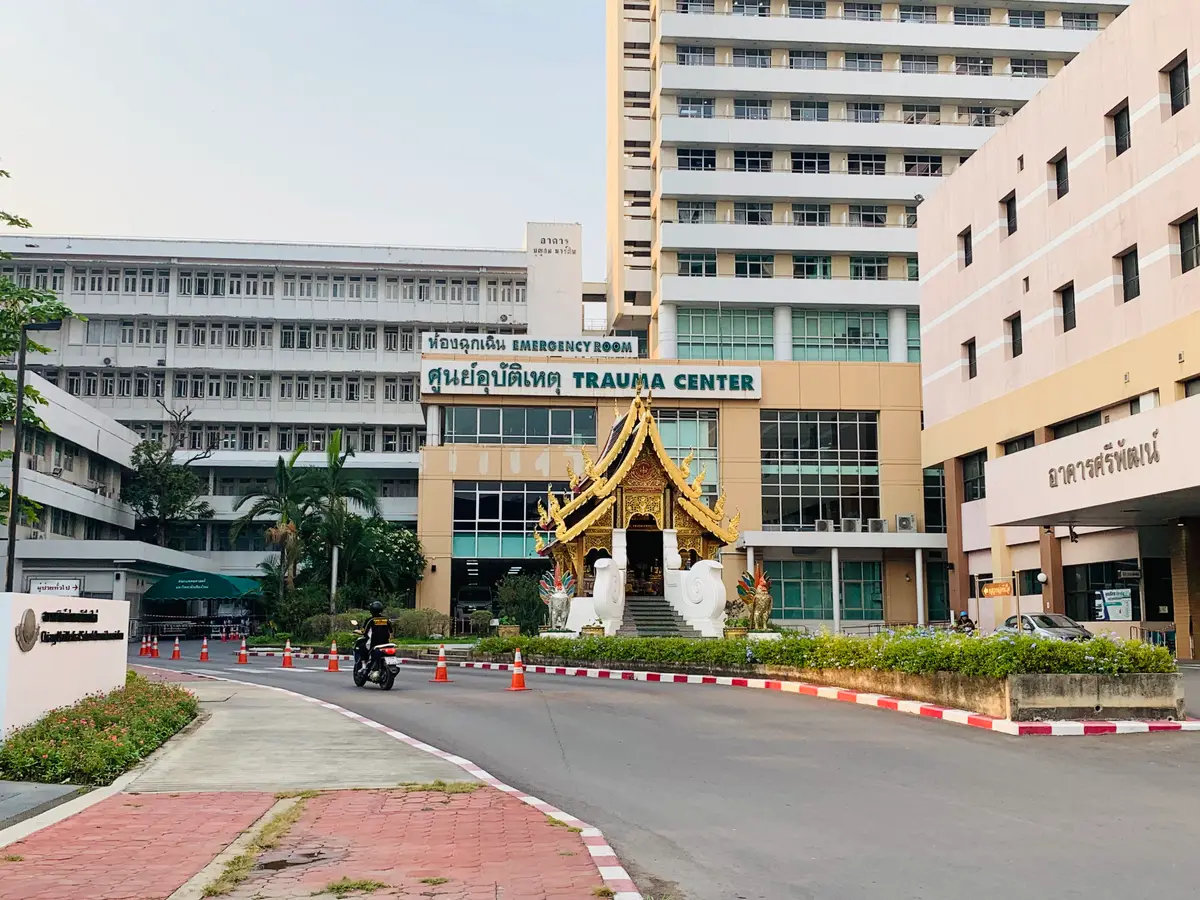
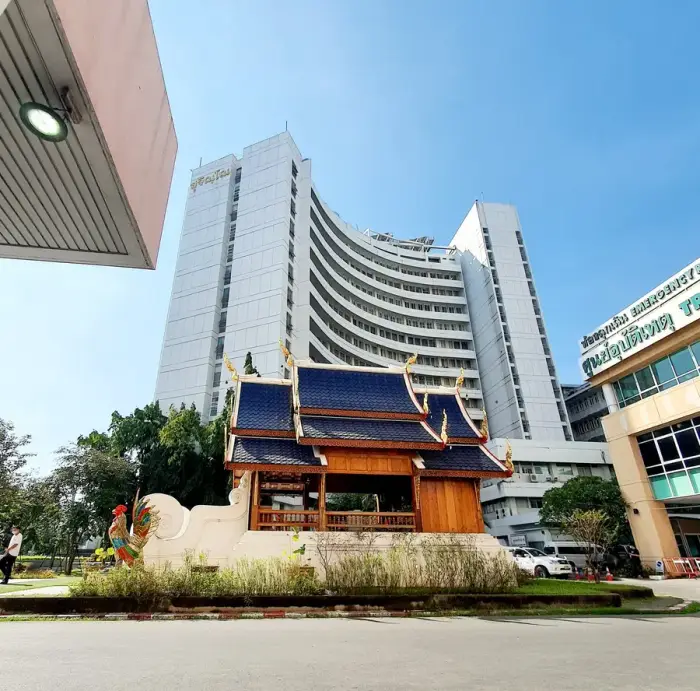
Maharaj Nakorn Chiang Mai Hospital, the Chiang Mai University hospital, is at 110 Inthawarorot Rd., Sri Phum, Mueang Chiang Mai 50200. Its Emergency Room is open 24 hours a day, 7 days a week.
The emergency entrance area of Maharaj Nakorn Chiang Mai Hospital.Maharaj Nakorn Chiang Mai Hospital 110 Intrawarorot Rd, Si Phum, Mueang Chiang Mai District, Chiang Mai 50200, Thailand · Open in Google Maps (opens in a new tab)
No official text sets a PM2.5 level for leaving town. What the Pollution Control Department’s index gives is advice by colour, and you decide against it.
Level
General public
People at risk
Yellow, AQI 51-100
Reduce time on strenuous outdoor activity
PM2.5 mask every time outside, reduce strenuous activity, see a doctor quickly if symptoms
Orange, AQI 101-200
PM2.5 mask every time outside, limit strenuous activity
Avoid strenuous activity, follow the doctor’s advice, go to a doctor if symptoms
Red, AQI 201 and above
Stop outdoor activities
Stay in an area safe from air pollution, keep medicine ready
At risk means people over 60, children aged 5 or under, pregnant women, and people with heart, blood-vessel or respiratory disease. If you are in that group, ask your doctor before the season; the index tells people with underlying disease to follow their doctor’s advice strictly.
In 2026 red readings ran from late March into early April, and the burning ban ran to 31 May. That is the window the advice above applies to. The daily command-centre reports ended on 15 May.
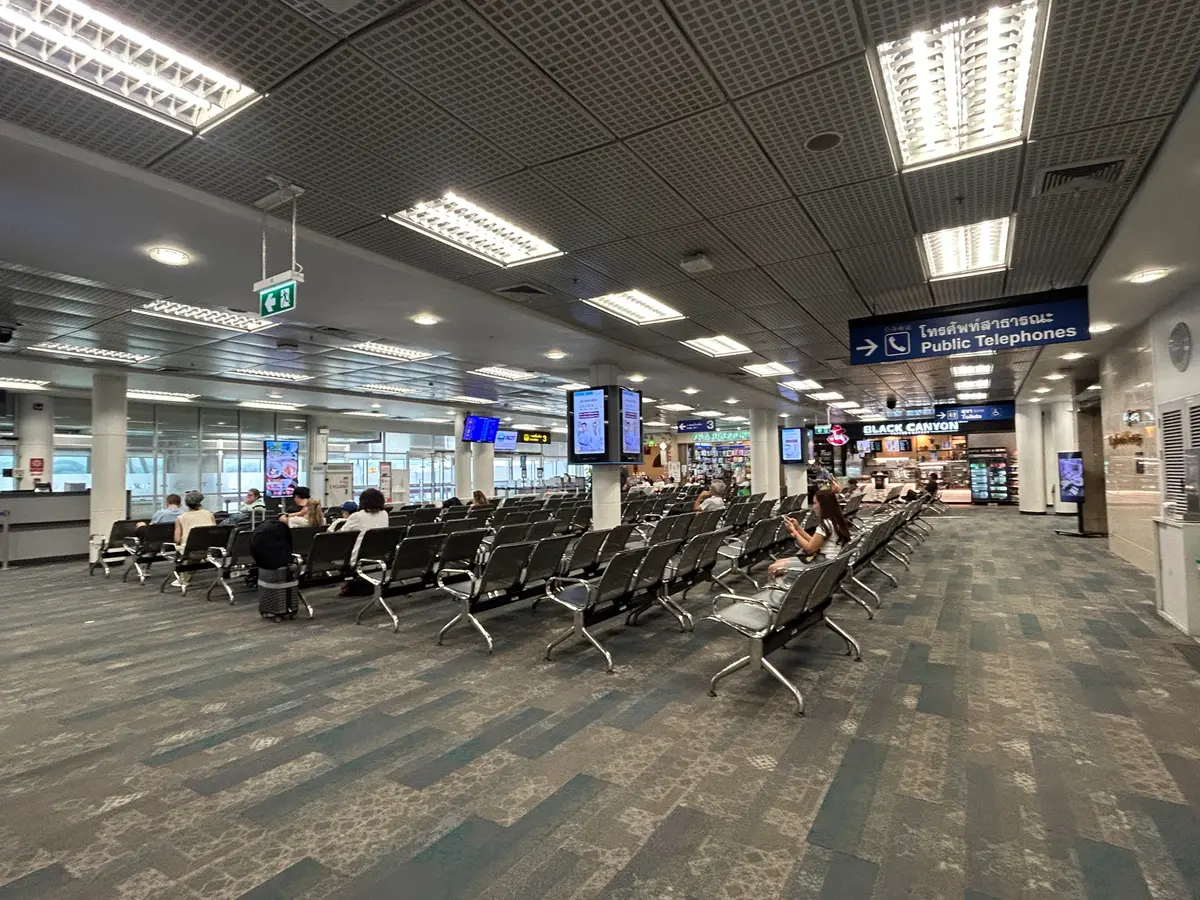
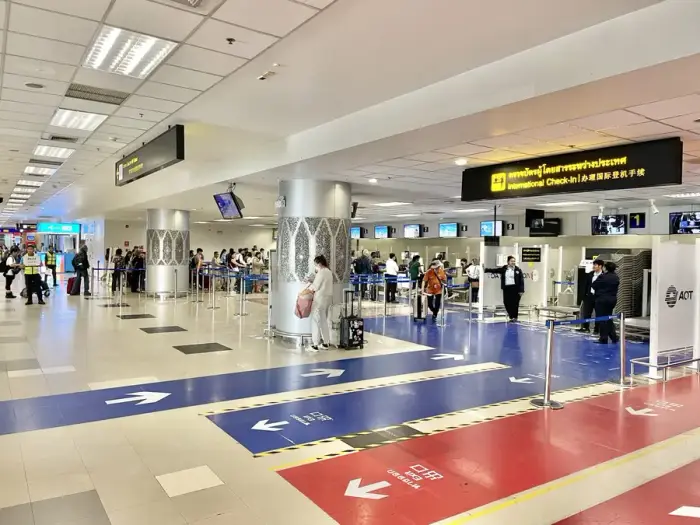
A waiting area inside Chiang Mai International Airport.Chiang Mai International Airport 60 ถนน มหิดล Suthep, Mueang Chiang Mai District, Chiang Mai 50200, Thailand · Open in Google Maps (opens in a new tab)
Not confirmed: Next season's ban dates: none announced when this page was last checked. The 2025 and 2026 bans both began on 1 January, so look for the province's PR office news in December. The fines below come from a 2025 police summary, not the 2026 announcement. No official PM2.5 level says when to leave town.
A Chiang Dao District notice dates the 2026 request from 1 January. Red readings reached Chang Phueak, in the city, from 29 March.
When does it end?
The provincial ban on burning ran to 31 May 2026. The command centre ended its daily PM2.5 situation reports on 15 May 2026, when the rainy season was declared.
What PM2.5 level is unhealthy?
The Thai standard is 37.5 micrograms per cubic metre over 24 hours and 15 as a yearly mean. The red band starts at 75.1.
Where do I check the air quality?
The PCD Chiang Mai office names the Air4Thai website and app for following air quality reports.
Who counts as at risk?
People over 60, children aged 5 or under, pregnant women, and people with heart, blood-vessel or respiratory disease.
Is open burning banned in Chiang Mai?
Yes, by a provincial announcement: the PR office's 29 April text says it bans burning in all areas until 31 May 2026. The public campaign is a request.
What are the fines for burning?
A 2025 police summary lists up to 3 months in jail or a fine of up to 25,000 baht for burning that causes a nuisance. Parks and reserve forest carry far more.
Where do I report burning?
The Chiang Mai police give 0-5311-2808 or 191, 24 hours a day.
What causes the smoke?
The sources are forest fires, burning in farmland, transboundary haze, traffic and factories.
Which emergency room is open round the clock?
The Maharaj Nakorn Chiang Mai Hospital Emergency Room is open 24 hours a day, 7 days a week.
General information checked against the sources listed above, not legal advice for your situation. Rules and office practice change; confirm with the immigration office or a licensed adviser before you act. See how guides are checked.