Best Time to Visit Chiang Mai: Weather, Haze, Festivals
November and December are the best months for weather and air together. Average highs are 29.2 to 30.8 degrees, with 14.1 to 40.9 mm of rain and 7.8 to 13.5 haze days. Haze climbs to 22.1 days in February and peaks at 26.8 in March. August and September are the wettest months.
On this page
For weather, pick November to February; for weather plus clean air, pick November or December. For the cleanest air, pick June to August. March has the most haze days, at 26.8, and April has the highest average high, at 36.7 degrees, so skip both unless you come for Songkran.
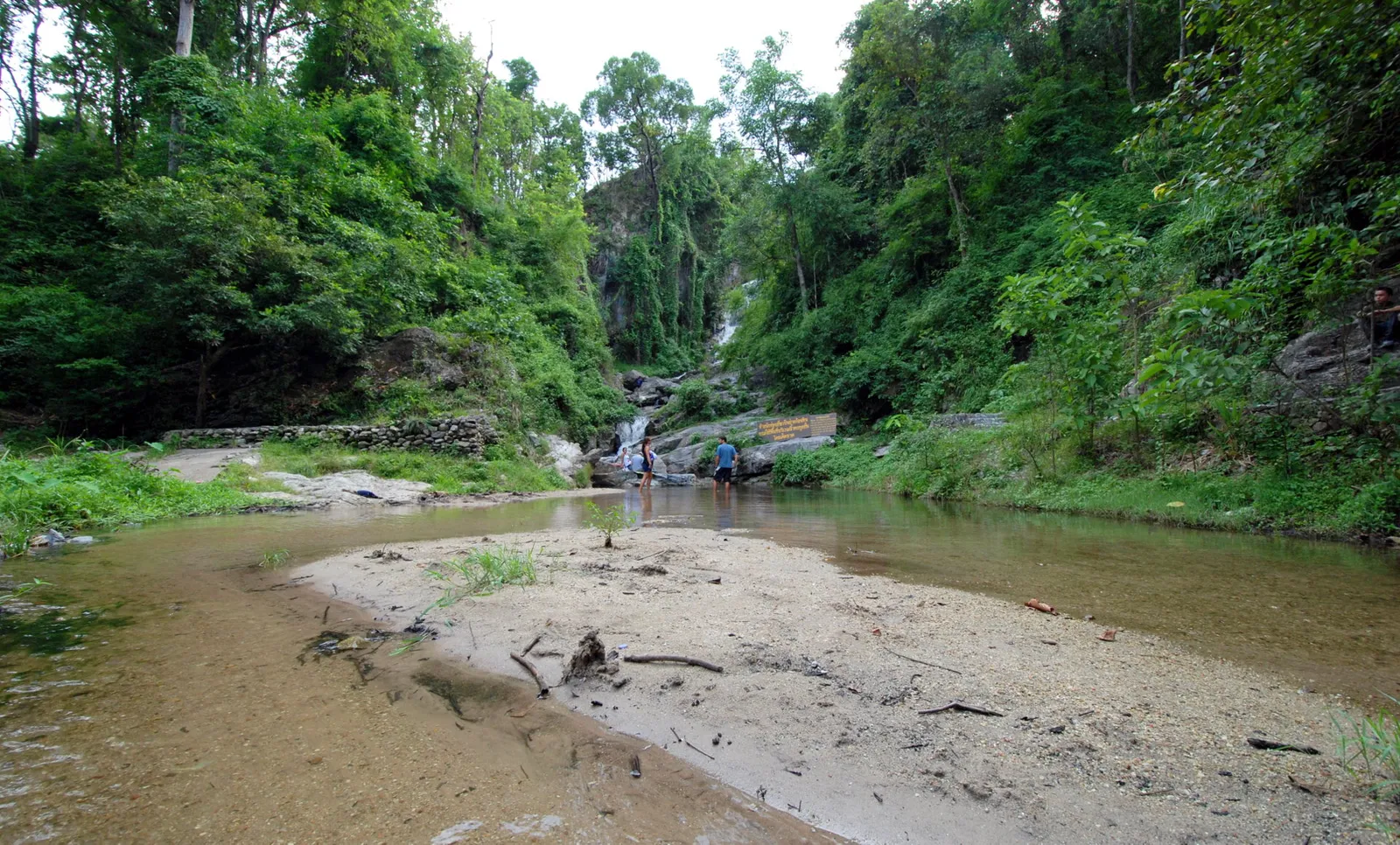
Chiang Mai weather by month
These are monthly averages for 1991-2020 from the Thai Meteorological Department’s Chiang Mai station. Highs and lows are in degrees Celsius.
| Month | Average high / low | Rain (mm) | Haze days |
|---|---|---|---|
| January | 30.0 / 15.7 | 11.3 | 18.7 |
| February | 32.9 / 16.8 | 9.6 | 22.1 |
| March | 35.4 / 20.1 | 20.4 | 26.8 |
| April | 36.7 / 23.4 | 54.3 | 17.1 |
| May | 34.7 / 24.2 | 167.5 | 1.5 |
| June | 33.2 / 24.5 | 118.2 | 0.0 |
| July | 32.1 / 24.3 | 148.6 | 0.0 |
| August | 31.6 / 24.0 | 223.3 | 0.2 |
| September | 32.0 / 23.7 | 207.2 | 1.3 |
| October | 31.7 / 22.6 | 123.8 | 6.7 |
| November | 30.8 / 19.9 | 40.9 | 7.8 |
| December | 29.2 / 16.9 | 14.1 | 13.5 |
Cool season: November to February
December has the lowest average high, at 29.2 degrees. January has the lowest average low, at 15.7 degrees. The lowest reading in 1991-2020 was 3.8 degrees, in December.
Rain is lowest from December to February, at 14.1, 11.3 and 9.6 mm. Sunshine runs 258.4 hours in January against 110.8 in August.
In 2026 the 49th Chiang Mai Flower Festival ran 13-15 February at Nong Buak Haad Public Park, with the parade on 14 February.
Hot season: March to May
April has the highest average high, at 36.7 degrees, with an average low of 23.4. The highest temperature the station has recorded is 42.5 degrees, in May.
March gets 20.4 mm of rain. It is also the hazy peak, with 26.8 haze days on average.
Rainy season: June to October
Rain peaks in August at 223.3 mm over 20.9 rainy days, then September at 207.2 mm over 18.1 days. The usual pattern is clear mornings, afternoon cloud and rain, and dry evenings.
Plan sights for the morning in these months. Haze all but disappears from June to August, at 0.0 to 0.2 days a month.
Burning season: when the air is worst
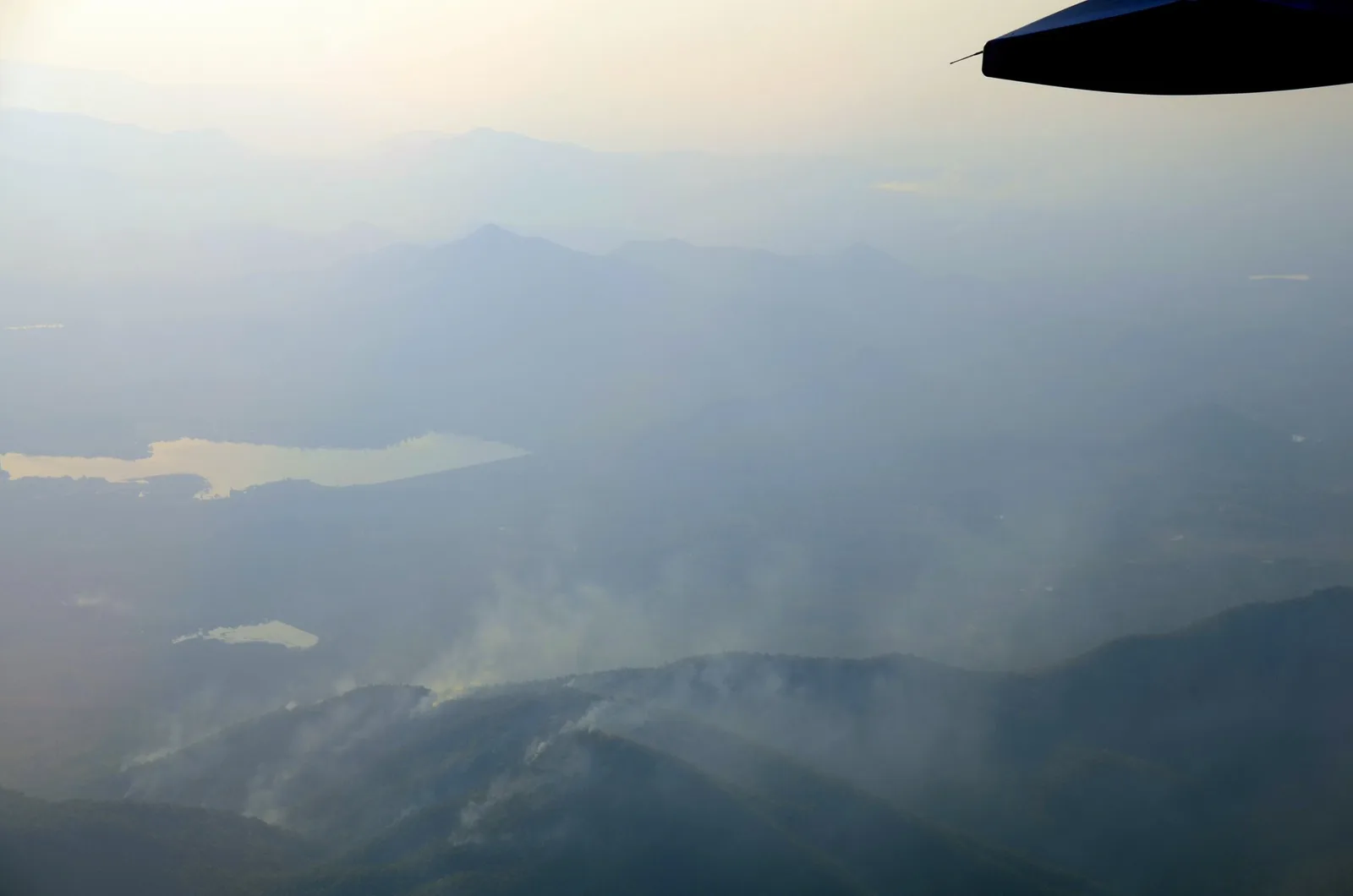
The met office counts days with haze, and they run high in the dry months: 18.7 in January, 22.1 in February, 26.8 in March and 17.1 in April. In May the count drops to 1.5.
The 2026 season followed that shape. On 1 April 2026 Chang Phueak in Mueang Chiang Mai read 110.3 micrograms of PM2.5 per cubic metre. It had been above the standard at the red level for four days since 29 March 2026.
The provincial ban on open burning in all areas ran to 31 May 2026. On 15 May 2026 the command centre ended its daily PM2.5 reports, because the rainy season had been declared. In 2025 the province described its absolute burning ban as running from 1 January to 15 May.
For the dates, the leave-or-stay question and masks, read the burning season guide and how to read PM2.5 and the AQI.
Festivals: Songkran, Yi Peng and Loy Krathong

Songkran in April
Songkran is officially a three-day national holiday on 13-15 April, though celebrations can run at different times and longer. It lands in the hottest month: April’s average high is 36.7 degrees.
Chiang Mai’s own programme is longer. The municipality’s 2026 festival ran 6-17 April and included the procession of the Phra Buddha Sihing and other revered Buddha images. The Tha Pae Gate water party ran 13-15 April, 18:00 to midnight each night, with Tha Pae Road closed to traffic.
For the pattern in a typical year, TAT listed the 2024 city festival as 4-20 April. The Song Nam Phra tradition at 11 temples ran 7-18 April that year. A separate Water War on 13 April 2024 was held at Lan-Muan-Jai, Central Chiang Mai Airport.
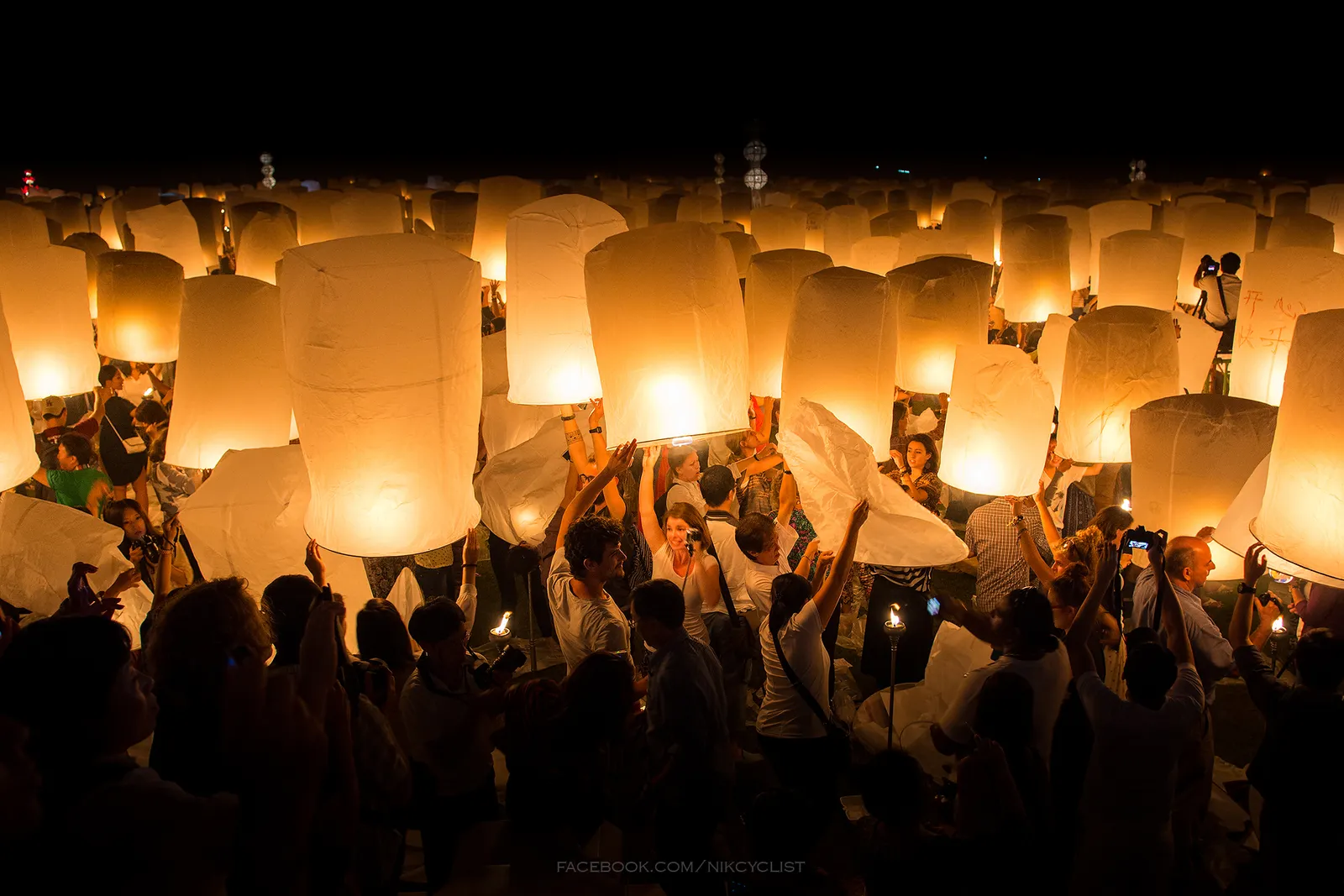
Yi Peng and Loy Krathong in November
Loy Krathong falls on the full moon of the 12th month of the Thai lunar calendar, which was Friday 15 November in 2024. That year TAT listed Chiang Mai’s Yi Peng Festival as 14-17 November, around the municipal areas.
For 2026, the ticketed CAD Khomloy Sky Lantern Festival is on 24-25 November, at the CAD Cultural Center Lanna in Mae On District. No 2026 dates are published for the municipal Yi Peng programme around the Old City.
Who each season suits (and who should skip it)

- Cool-weather travellers who also want low haze: November and December have 7.8 and 13.5 haze days. November to February has average highs of 29.2 to 32.9 degrees and 9.6 to 40.9 mm of rain a month.
- Haze-sensitive travellers: skip January to April, when haze averages 17.1 to 26.8 days a month.
- Heat-sensitive travellers: skip April, with an average high of 36.7 degrees and 23.4 degrees at night.
- Travellers who want clear air and green hills: June to August has 0.0 to 0.2 haze days, with 118.2 to 223.3 mm of rain.
- Festival chasers: Songkran is 13-15 April, and the ticketed CAD Yi Peng event is 24-25 November 2026.
How to get to Chiang Mai and around in each season
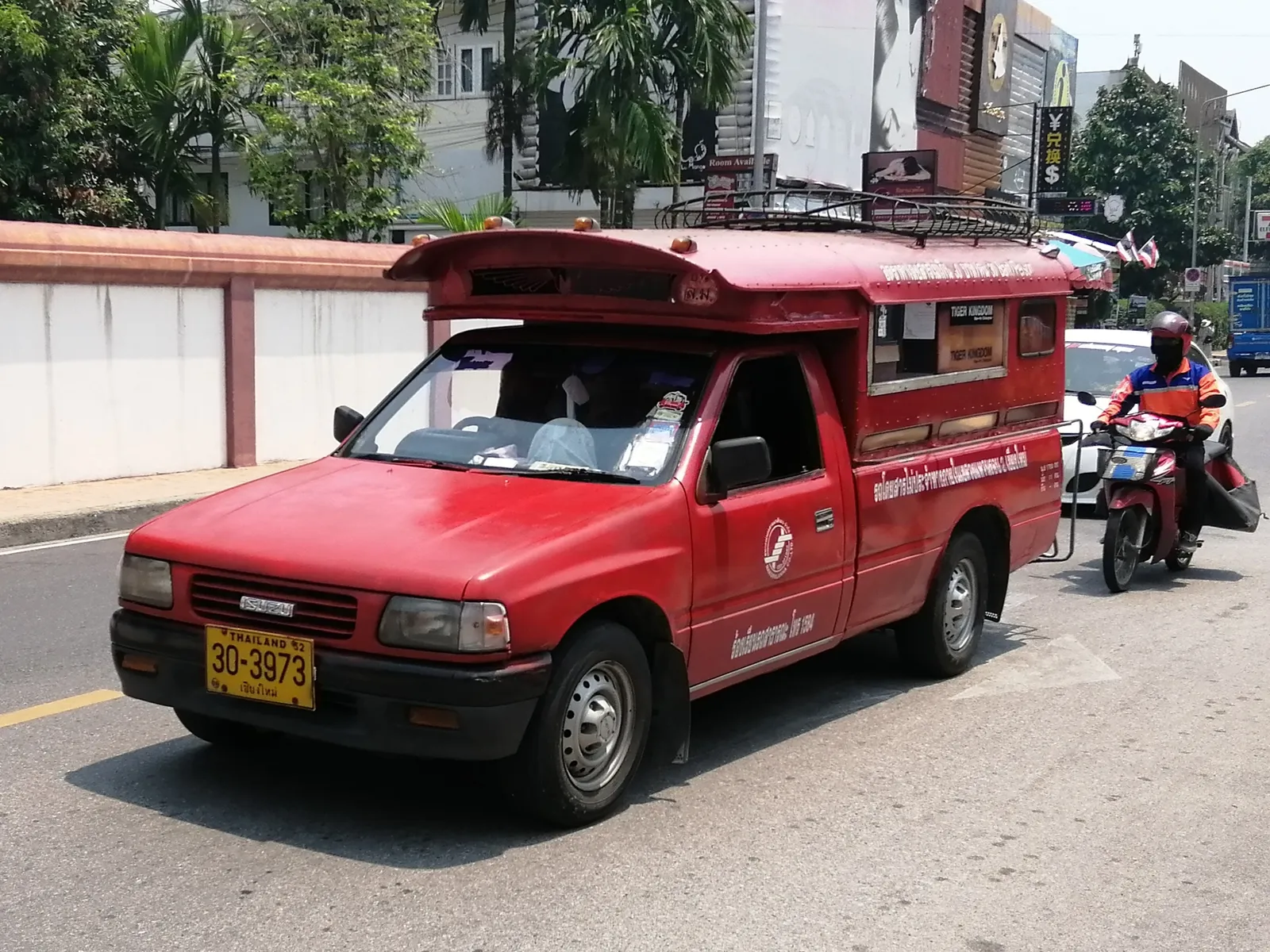
The airport guide compares taxi, Grab and bus from Chiang Mai International Airport.
In the rainy months, walk in the morning and ride in the afternoon, when rain usually arrives.
More in the getting around guide and the songthaew guide.
When to go and how long
- Cool and dry: December and January have the least rain, at 14.1 and 11.3 mm, with 13.5 and 18.7 haze days.
- Cool with less haze: November has 40.9 mm of rain and 7.8 haze days, fewer haze days than any month from December to April.
- Clearest air: June to August have 0.0 to 0.2 haze days.
Three days covers the main Old City sights, Doi Suthep and the markets. The three-day itinerary puts them in order, with the weekday each market runs.
Nearby and how to combine it
The Doi Suthep guide has the fee, hours and songthaew boarding points. The night markets guide picks the market by night, and the full list is in things to do in Chiang Mai.
Before you go
- Trips from January to April: check the air before booking, as haze averages 17.1 to 26.8 days a month then.
- Rainy months: plan outdoor stops before noon, since rain usually comes in the afternoon.
Photo credits
- Huai Kaew stream in the rainy season: Wikimedia Commons (opens in a new tab), Takeaway (CC BY-SA 3.0)
- Smoke from mountain fires seen from a plane over northern Thailand: Wikimedia Commons, Burning mountains Thailand (Takeaway) (opens in a new tab), Takeaway (CC BY-SA 3.0)
- Water fights during Songkran in Chiang Mai: Wikimedia Commons (opens in a new tab), CEphoto, Uwe Aranas (CC BY-SA 4.0)
- Lanterns lit at a Yi Peng release: Wikimedia Commons (opens in a new tab), Nik Cyclist (CC BY 2.0)
- The chedi at dusk: Wikimedia Commons (opens in a new tab), Zipposlide (CC BY-SA 4.0)
- A red songthaew, the shared truck taxi of Chiang Mai: Wikimedia Commons (opens in a new tab), Patiparn.Nice2002bkk (CC BY-SA 4.0)
- The Old City moat: Wikimedia Commons (opens in a new tab), User: (WT-shared) Jtaubrey at wts wikivoyage (CC BY-SA 4.0)
- Viharn Lai Kham at the back of the compound: Wikimedia Commons (opens in a new tab), Dennis G. Jarvis (CC BY-SA 2.0)
- A tuk-tuk parked beside a wall in Chiang Mai: Wikimedia Commons (opens in a new tab), Francesca (CC BY 2.0)
Step by step
- Pick what matters mostWeather points to November to February. The clearest air is June to August, at 0.0 to 0.2 haze days a month.
- Read your month in the tableCheck the average high, rain and haze days for the month you can travel.
- Add a festival if you want oneSongkran is 13-15 April. The ticketed CAD Yi Peng event is 24-25 November 2026; the municipal dates are not yet published.
- Check the air before January to April tripsHaze averages 17.1 to 26.8 days a month from January to April.
Not confirmed: Yi Peng 2026: no official city programme is published yet. The 24-25 November dates are for the ticketed CAD Khomloy event at Mae On, not the municipal festival. Check the TAT or Chiang Mai municipality page before booking.
Reach readers planning life in Chiang Mai. Advertise → hello@chiangmaijao.com
Common questions
What is the best month to visit Chiang Mai?
November to February: average highs of 29.2 to 32.9 degrees and 9.6 to 40.9 mm of rain a month. Haze days start to rise from 7.8 in November.
When not to go to Chiang Mai?
March has the most haze, at 26.8 days, and April has the highest average high, at 36.7 degrees. August and September are the wettest, with 223.3 and 207.2 mm.
Is Chiang Mai hot in April?
April's average high is 36.7 degrees and the lowest night average is 23.4 degrees. The record high at the station is 42.5 degrees, set in May.
Does it get cold in Chiang Mai?
January's average low is 15.7 degrees and December's is 16.9. The lowest reading in 1991-2020 was 3.8 degrees, in December.
When is Songkran in Chiang Mai?
The national holiday is 13-15 April. The city programme runs longer: the 2026 city festival ran 6-17 April.
When is Yi Peng in 2026?
The ticketed CAD lantern festival is on 24-25 November 2026. The municipal Old City programme has no published 2026 dates yet.
Is the rainy season worth it?
The usual pattern is clear mornings, afternoon cloud and rain, and dry evenings. August has 20.9 rainy days on average.
Is there smoke in Chiang Mai in February?
February averages 22.1 days of haze at the Chiang Mai station. The provincial burning ban started on 1 January in 2025 and ran to 15 May.
Read next
General information checked against the sources listed above, not legal advice for your situation. Rules and office practice change; confirm with the immigration office or a licensed adviser before you act. See how guides are checked.
Spotted an error? Report it.