Thailand Marriage Visa in Chiang Mai: Money and Documents
Staying as the spouse of a Thai national takes two applications. A Thai embassy grants a Non-Immigrant O visa. Chiang Mai Immigration then extends the stay for up to 1 year at a time. A foreign husband shows THB 40,000 a month, or THB 400,000 in a Thai bank for 2 months. A foreign wife has no money figure.
On this page
- Two applications, one after the other
- Register the marriage first
- Step 1: the Non-Immigrant O visa at an embassy
- The money test: THB 400,000 or THB 40,000 a month
- Documents for the extension at Chiang Mai Immigration
- Other family members
- If the money test does not fit
- After approval: reports, re-entry and the yearly renewal
- Where to file in Chiang Mai
- Step by step
- Common questions
Staying in Thailand as the spouse of a Thai national takes two applications. First comes a Non-Immigrant O visa from a Thai embassy. Then Chiang Mai Immigration extends the stay for up to 1 year at a time. Which test you meet depends on who the foreign spouse is.
| Foreign spouse is | Money test at the extension |
|---|---|
| The husband, Thai wife | One of three tests in clause 2.18 (6) |
| Either spouse, same-sex marriage | One of three tests in clause 2.18 (7) |
| The wife, Thai husband | None named in the order |
Two applications, one after the other
The Non-Immigrant O visa is single-entry, to be used within 90 days of issue. On arrival the holder is given an initial permit to stay of up to 90 days. Once in Thailand, the holder can apply to the Immigration Bureau to extend the stay to 1 year. The extended permit is valid for multiple entries.
The extension is clause 2.18 of Immigration Bureau Order 12/2568, for family of a Thai national. The order applies from 23 January 2025. The foreigner must already hold a Non-Immigrant visa. For a spouse, the relationship must exist both in law and in fact.
Register the marriage first
Registration is the first filing. Both persons must be at least 18, and a court may allow it earlier for good reason. A district registration office anywhere in Thailand can register it, regardless of either party’s domicile. So can a Bangkok district (khet) office or a Thai embassy or consulate abroad.
The foreign party supplies a certificate of marital status. A document in a foreign language needs its Thai translation certified by the Department of Consular Affairs. A foreigner’s embassy affidavit of single status must pass legalisation by the Nationality and Legalisation Division of that department.
- Two witnesses are required.
- Registering inside the registry office is free of charge.
Step 1: the Non-Immigrant O visa at an embassy
The visa stage runs on each embassy’s own checklist. Money proof is where they differ.
Seoul asks the foreign spouse for income or a deposit. Kuala Lumpur asks for the Thai spouse’s bank statement. Both ask for proof of the relationship, such as a marriage certificate. The fixed test is the one at the extension, below.
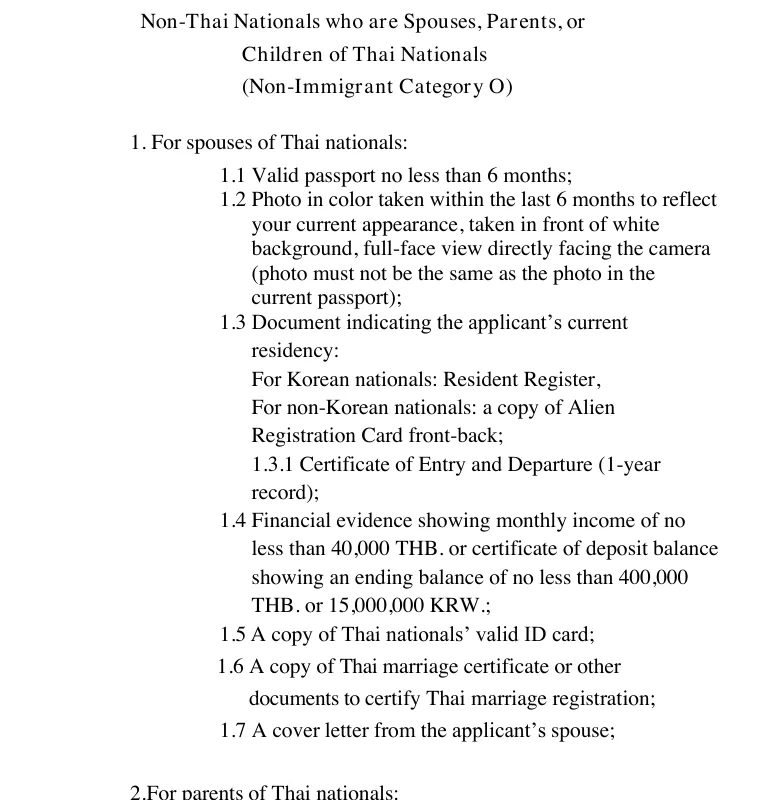
Seoul asks the foreign spouse of a Thai national for these items.
- Financial evidence of monthly income of at least THB 40,000, or a deposit balance of at least THB 400,000.
- A copy of the Thai marriage certificate or other documents certifying the Thai marriage registration.
- A copy of the Thai spouse’s valid ID card.
- A cover letter from the applicant’s spouse.
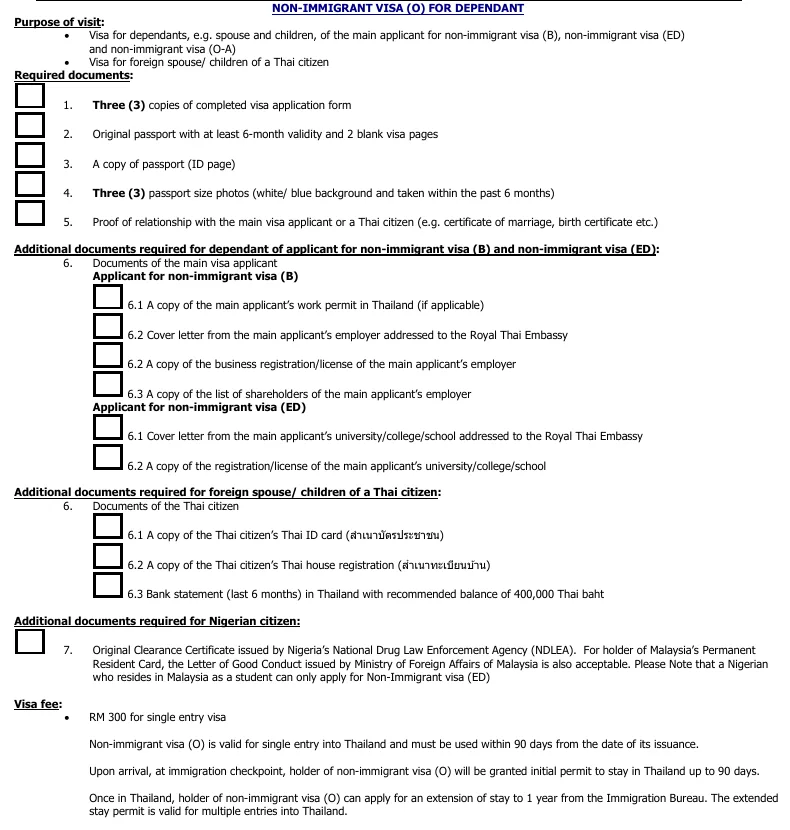
Kuala Lumpur asks for the Thai citizen’s bank statement for the last 6 months in Thailand, with a recommended balance of THB 400,000.
The money test: THB 400,000 or THB 40,000 a month
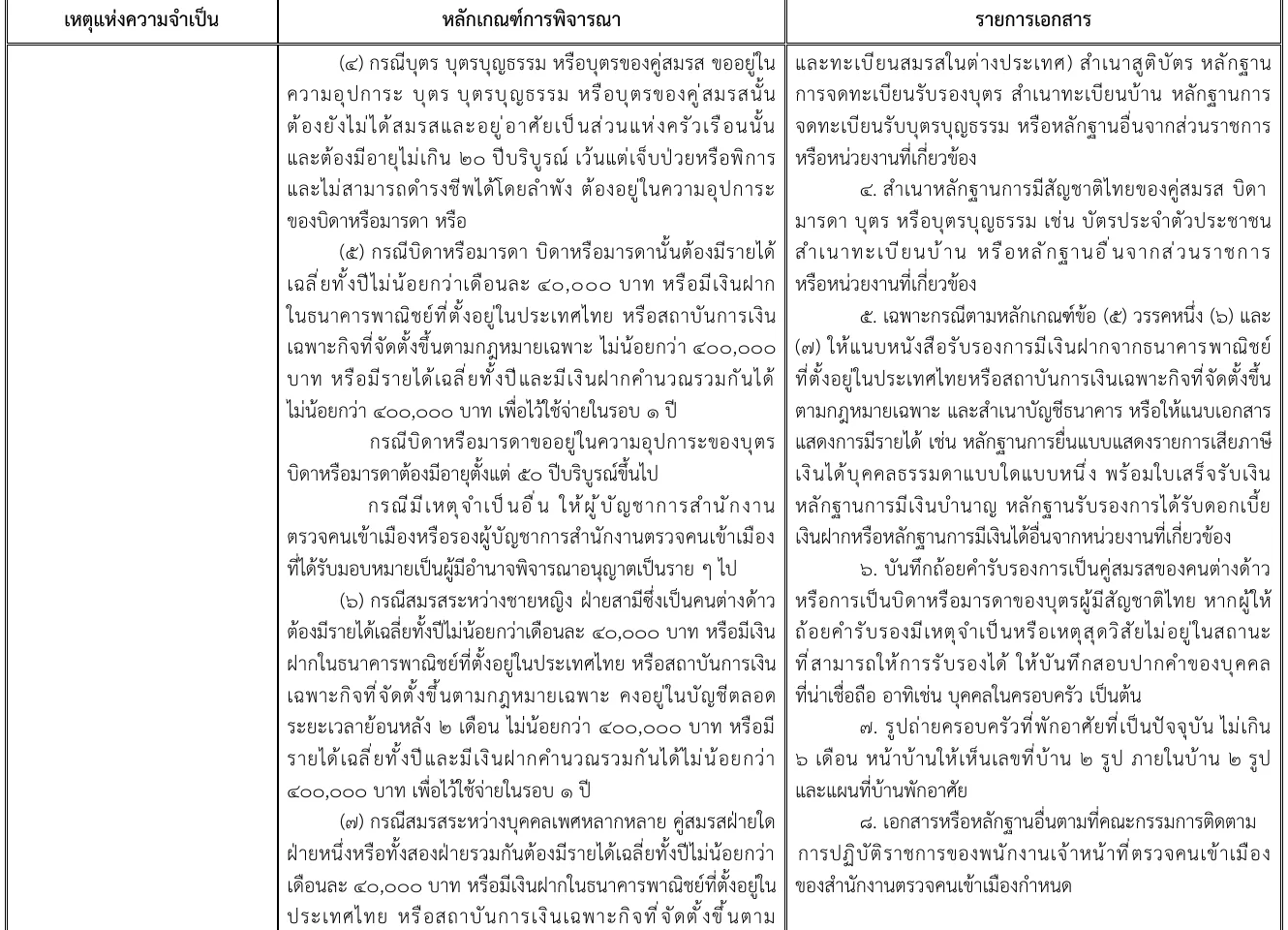
For a marriage between a man and a woman, the order puts the money test on the foreign husband.
(๖) กรณีสมรสระหว่างชายหญิง ฝ่ายสามีซึ่งเป็นคนต่างด้าวต้องมีรายได้เฉลี่ยทั้งปีไม่น้อยกว่าเดือนละ ๔๐,๐๐๐ บาท
Editor’s translation: In a marriage between a man and a woman, the husband who is the alien must have average yearly income of not less than 40,000 baht a month.
Immigration Bureau Order 12/2568, clause 2.18 (6)
The husband meets any one of three tests.
- Average yearly income of at least THB 40,000 a month. The order averages income over the whole year, so one strong month does not meet it.
- At least THB 400,000 in a Thai bank account, held through the past 2 months. The money must stay in the account throughout the 2 months before filing.
- Income and deposit together of at least THB 400,000, to cover 1 year.
A marriage between persons of diverse sexes follows clause 2.18 (7). Either spouse, or both together, can meet the income or deposit test.
A foreign wife of a Thai husband
Criteria (6) and (7) name a foreign husband and a diverse-sex marriage. The bank certificate and income papers are listed only for those cases. A foreign wife of a Thai husband matches neither, so the order sets her no money test. The rest of the list below still applies: the marriage record, the Thai husband’s nationality evidence, the signed statement and the home photographs.
Where the deposit sits
The deposit sits in a commercial bank in Thailand. Kasikornbank asks foreigners opening a savings account for a passport and a Non-Immigrant visa of any type. It does not open accounts for holders of tourist visas, Visa on Arrival, Free Visa or the DTV. It also asks for documents matching the purpose of entry.
The bank account guide covers the other banks. The financial proof table compares this test with the other routes.
Documents for the extension at Chiang Mai Immigration

Clause 2.18 lists these documents.
- An application form.
- A copy of the applicant’s passport.
- A copy of the document showing the marriage. For a marriage registered in Thailand, the marriage register record, Kor Ror 2 (คร.2); for one registered abroad, the family-status register record, Kor Ror 22.
- A copy of evidence of the spouse’s Thai nationality, such as an ID card or a house registration copy.
- For the money routes, a certificate of deposit from a commercial bank in Thailand and a copy of the bank account.
- Or, in place of the deposit certificate, income documents such as a personal income tax return with receipt, evidence of a pension or evidence of deposit interest.
- A signed statement confirming the status of spouse of the alien. If the person giving it cannot, the officer takes the oral statement of a credible person such as a family member.
- Family photographs of the current residence, taken no more than 6 months earlier.
- Other documents set by the Immigration Bureau’s monitoring committee.
The home photographs
The order asks for 2 photos at the front of the house showing the house number, 2 photos inside the house, and a map of the residence. Take them within the 6 months before filing.
Yearly renewal
Each extension runs for no more than 1 year at a time. The order gives one document list for clause 2.18 and no separate list for a later year. Bring the same papers again, with a fresh bank certificate and photos taken within the 6 months before filing.
If the officer needs more time or refuses
While an application is considered, the foreigner may stay on with appointment stamps, in total no more than 30 days from the day the permission ended. If the criteria are not met, the officer issues a refusal and the foreigner must leave within 7 days of the day permission ended. The fee is THB 1,900.
Other family members
The same clause covers a child, adopted child or spouse’s child. The child must be unmarried, part of the household and aged no more than 20 full years, unless ill or disabled. A parent of a Thai national needs average income of at least THB 40,000 a month or a deposit of at least THB 400,000.
The house-master or owner of the home where the foreigner lives files the residence notice (TM.30) within twenty-four hours of the foreigner taking up residence.
If the money test does not fit
The Destination Thailand Visa asks for financial evidence of at least THB 500,000. It is valid for 5 years, with up to 180 days per entry. The DTV guide and the route comparison cover who qualifies.
A retirement extension asks the applicant to be at least 50 years old. Its money tests are in the retirement extension guide.
After approval: reports, re-entry and the yearly renewal
A foreigner permitted to stay temporarily must notify an immigration officer of their address every 90 days. The notice may be made from 15 days before until 7 days after the due date. Reporting late means reporting in person and paying a THB 2,000 fine. The address report guide has the filing steps.
Leaving Thailand without a re-entry permit cancels the permitted stay. A single permit costs THB 1,000 and a multiple one THB 3,800. Each extension runs for no more than 1 year at a time.
Where to file in Chiang Mai
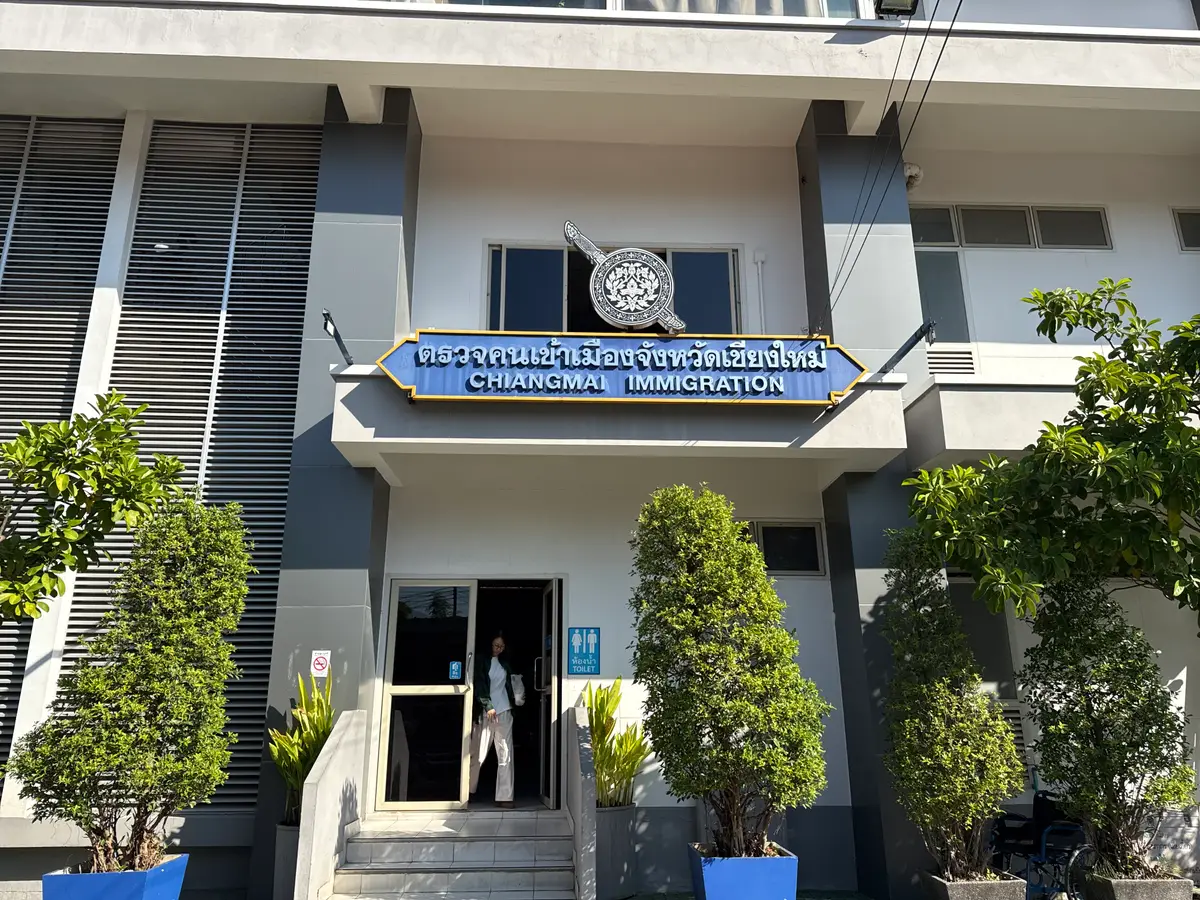
Chiang Mai Immigration is at 71 Moo 3, Sanam Bin (Airport) Road, Suthep, Mueang, Chiang Mai 50200. The telephone is 053 201 755. Its Services for Foreigner Section handles applications for and changes to all types of visa.
71 ถนนสนามบิน Suthep, Mueang Chiang Mai District, Chiang Mai 50200, Thailand · Open in Google Maps (opens in a new tab)
Open in Google Maps (opens in a new tab)
The second service point at Central Festival handles 90-day reports, re-entry permits and tourist, teacher and student extensions. The office guide has the counters and hours: see Chiang Mai Immigration Office.
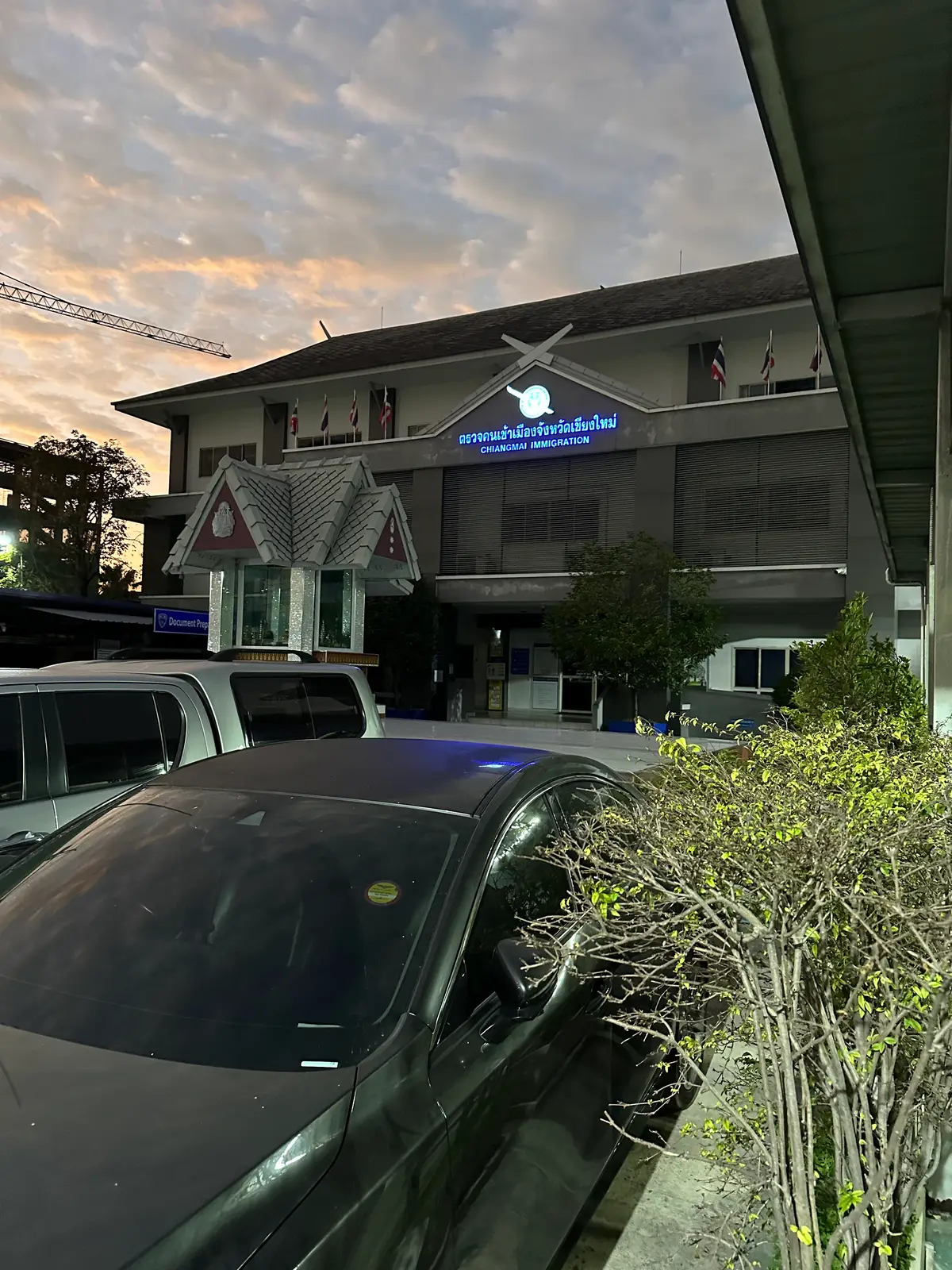
Photo credits
- Photos and clips uploaded to Google Maps (Chiang Mai Immigration Office on Google Maps (opens in a new tab)) by Peter Miller (WHY THAI), ben chidgey.
Step by step
- Register the marriageRegister at any district registration office in Thailand; registering inside the office is free of charge.
- Get the Non-Immigrant O visaApply at a Thai embassy with proof of the relationship, then enter within 90 days of issue on the single-entry visa.
- Prepare the money proofA Thai bank certificate of deposit with a copy of the bank account, or income papers.
- File at Chiang Mai ImmigrationBring the form, passport copy, marriage register record, spouse's nationality evidence, signed statement and home photographs.
- Keep reporting and renewNotify your address every 90 days and renew before each permission of up to 1 year ends.
Not confirmed: A foreign wife of a Thai husband: the order sets no money figure for her. Whether the counter still wants bank papers is not published, so a deposit certificate in the folder covers both cases. A home visit: the order lists photos and a map, not a visit. A shorter deposit history: the order sets a 2-month look-back.
Reach readers planning life in Chiang Mai. Advertise → hello@chiangmaijao.com
Common questions
Is there a single Thai marriage visa?
It is two filings. A Thai embassy grants a Non-Immigrant O visa to the foreign spouse of a Thai citizen. Once in Thailand, the holder can apply to the Immigration Bureau to extend the stay to 1 year.
How much money does a foreign husband need?
Any one of three tests meets the clause. Average yearly income of at least THB 40,000 a month. At least THB 400,000 in a Thai bank account through the past 2 months. Or income and deposit together of at least THB 400,000.
Do the home photos have to be recent?
The order asks for family photographs of the current residence taken no more than 6 months earlier.
Which document proves the marriage?
For a marriage registered in Thailand, the marriage register record, Kor Ror 2; for one registered abroad, the family-status register record, Kor Ror 22.
What does the extension cost?
The Immigration Bureau fee schedule lists THB 1,900 for an extension of stay.
Do I need a re-entry permit to travel?
Leaving Thailand without a re-entry permit cancels the permitted stay. A single permit costs THB 1,000 and a multiple one THB 3,800.
What if the extension is refused?
The officer issues a refusal and the foreigner must leave within 7 days of the day the permission ended.
Can a same-sex couple use this route?
Clause 2.18 (7) covers a marriage between persons of diverse sexes: either spouse, or both together, can meet the income or deposit test.
Read next
General information checked against the sources listed above, not legal advice for your situation. Rules and office practice change; confirm with the immigration office or a licensed adviser before you act. See how guides are checked.
Spotted an error? Report it.