First Week in Chiang Mai: A Day-by-Day Checklist
Complete the free TDAC online within 3 days before you land. On day one, at check-in, ask your hotel or landlord to file the TM.30 address notice, which is due within twenty-four hours. A visa-exempt stay is up to 30 days and can be extended by up to 30 days. Install the Air4Thai app and save 191, 1669 and 1155.
On this page
The first week has two kinds of tasks: immigration deadlines that run on a clock, and setting up daily life. Do the clocks first, then the rest. Each step links to the guide that owns it.
Before you fly: the arrival card
Complete the TDAC online within 3 days before arrival. It is filed for every entry, is free, and is not a visa. See the TDAC guide.
Visa-exempt entry is for tourism only, up to 30 days. Entering by land is capped at twice per calendar year. Officers may ask for proof of accommodation and onward travel within 30 days, and may request proof of funds of THB 20,000 per person. The visa exemption guide has the detail.
Day one: land, get online, get to your bed
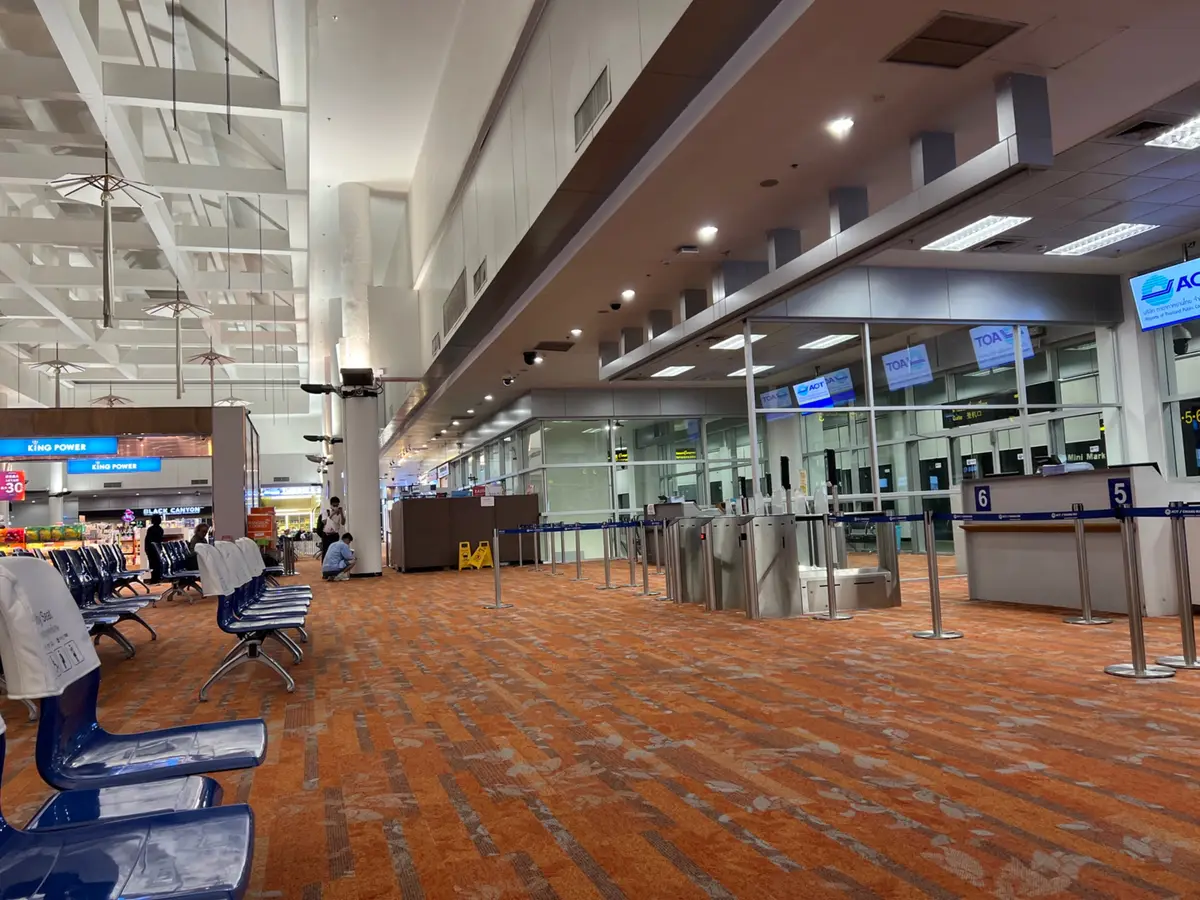
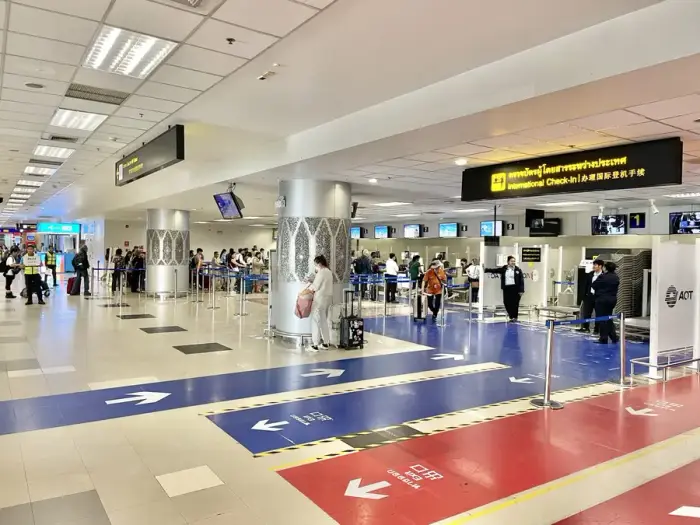
Your options from the airport are in Chiang Mai airport to the city. The SAWASDEE by AOT app offers airport Wi-Fi for up to 3 hours.
At check-in, ask the host to file the TM.30 address notice. The house-master, owner or possessor of the residence, or the hotel manager, must notify immigration within twenty-four hours. The duty sits with the host, not with you.
Save the emergency numbers now: 191 for general emergencies, 1669 for emergency medical services and 1155 for the Tourist Police. Chiang Mai safety and scams covers the traps newcomers meet.
Days two and three: SIM, cash and the TM.30 follow-up
The TM.30 clock starts when you take up residence, so the twenty-four hours are already running on day one. The English text of the Act says “arrival”, but the Thai text reads “from the time the alien enters to reside”.
On day two, ask the host for the receipt. If the host will not file, phone Chiang Mai Immigration on 053 201 755.
Chiang Mai Immigration links an online TM.30 service for owners. The full process is in the address notice guide for Chiang Mai.
Buy a tourist SIM with your passport; the SIM must be registered with a valid passport, at most 3 per person per brand. An 8-day tourist SIM costs 499 Baht at AIS and 499 THB for the True Infinite SIM. True and dtac tourist SIM validity must not exceed 60 days. See SIM card and eSIM in Chiang Mai.
Foreign exchange in Thailand must be done with persons holding a foreign exchange licence from the Minister of Finance. See currency exchange in Chiang Mai. A Thai ATM charges a flat fee on a foreign card: Kasikornbank charges THB 250 for Visa or UnionPay and THB 350 for MasterCard. See ATM fees for foreign cards.
Days four to six: bank, air quality and health
Kasikornbank opens a savings account for a foreigner with a passport and a non-immigrant visa of any type. It does not open accounts for holders of tourist visas, Visa on Arrival, Free Visa or DTV. A tourist on a visa-exempt stay should not plan on a Thai account; see opening a bank account in Chiang Mai.
UK advice says that Chiang Mai has high levels of air pollution at times and is affected by seasonal smoke haze from farmers burning trees and crops. The pollution sometimes reaches dangerous levels and may worsen bronchial, sinus or asthma conditions.
The Thai 24-hour PM2.5 standard is 37.5 micrograms per cubic metre, and an index of 100 is equivalent to that standard. At 101 to 200, the official table asks the general public to use a PM2.5 mask every time they go outside. The 2026 “Chiang Mai does not burn” request ran from 1 January to 31 May; check the next season’s dates before you plan a January-to-May stay.
The Pollution Control Department invites people to check the air around them with the Air4Thai app. The Air4Thai site has a regional report for the North. UK advice says all hospitals require a guarantee of payment before treating patients. See air quality in Chiang Mai, the burning season guide and the English-speaking hospitals.
UK advice also suggests signing up for travel advice email alerts.
Day seven: your end date and the immigration office
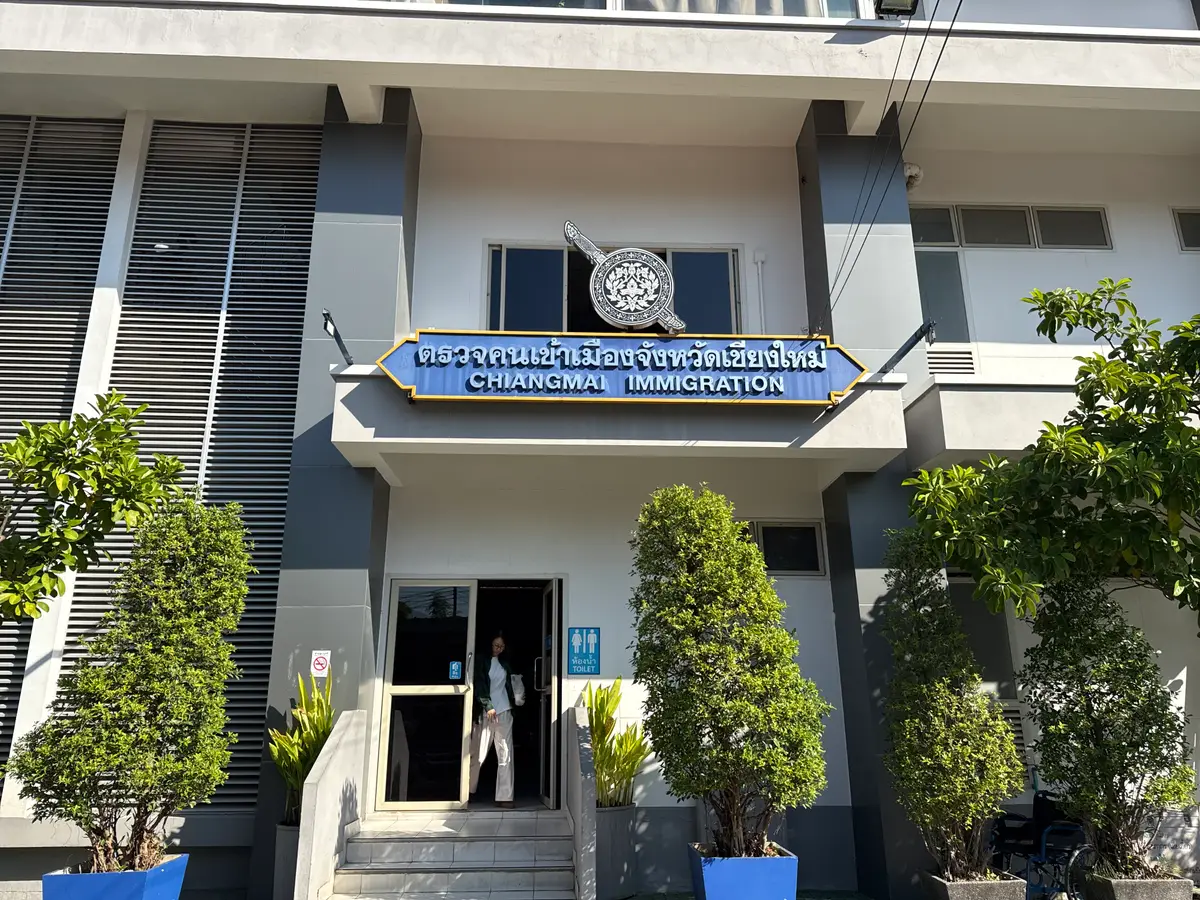
Work out when your stay ends. A visa-exempt visitor can request an extension of up to 30 days. The fee is THB 1,900.
The extension is filed at the immigration office that covers where you live. Chiang Mai Immigration offers an online e-Extension for some visa categories only. See the Chiang Mai Immigration Office guide and the tourist extension guide.
After the first week, the next decisions are housing, a lease and a way to get around. See rent an apartment in Chiang Mai, Chiang Mai getting around and health insurance for expats.
The 90-day report
A foreigner permitted to stay temporarily notifies an immigration officer of their address every 90 days. The Act starts the duty once you stay longer than ninety days, so a visa-exempt stay of up to 30 days does not trigger it. Count from your latest arrival date. A report can be made from 15 days before until 7 days after the due date.
A late report must be made in person, with a fine of THB 2,000. Reports can be made in person, by registered post or online. See the periodic address report guide.
Overstay
The overstay fine is THB 500 per day, capped at THB 20,000.
Where the office is
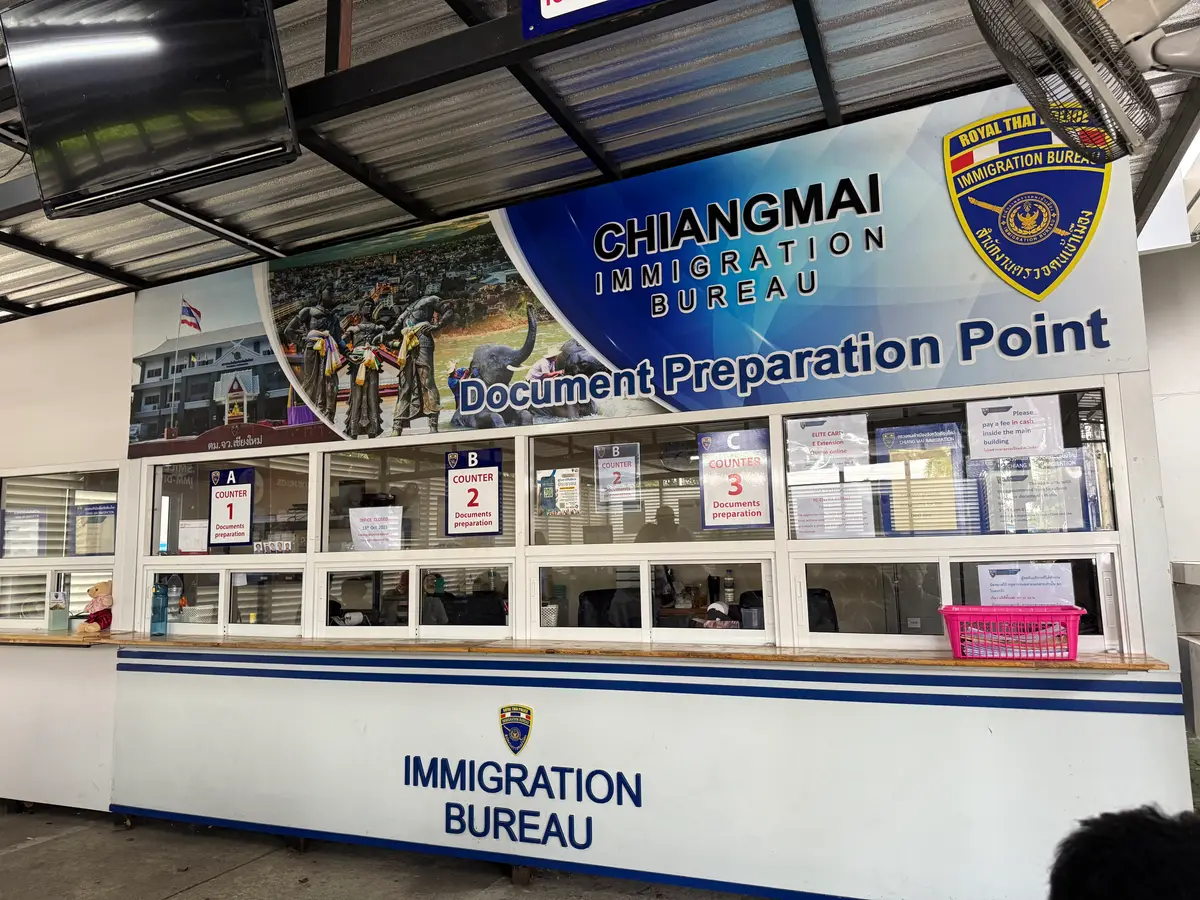
Chiang Mai Immigration is at 71 Moo 3, Sanam Bin (Airport) Road, Suthep, Mueang, Chiang Mai 50200. Its telephone is 053 201 755.
No counter hours are posted online. The service runs Monday to Friday, excluding official holidays, with counter hours of 08.30 to 16.30 and a lunch break. Treat that as a 2019 figure and phone 053 201 755 first.
A second service point is at Central Festival Chiangmai, 2nd floor, phone 065-765-7029. It is open 09:00 to 17:00 and lists 90-day reporting, visa re-entry from 09:00 to 12:00 and extending short-term tourist visas.
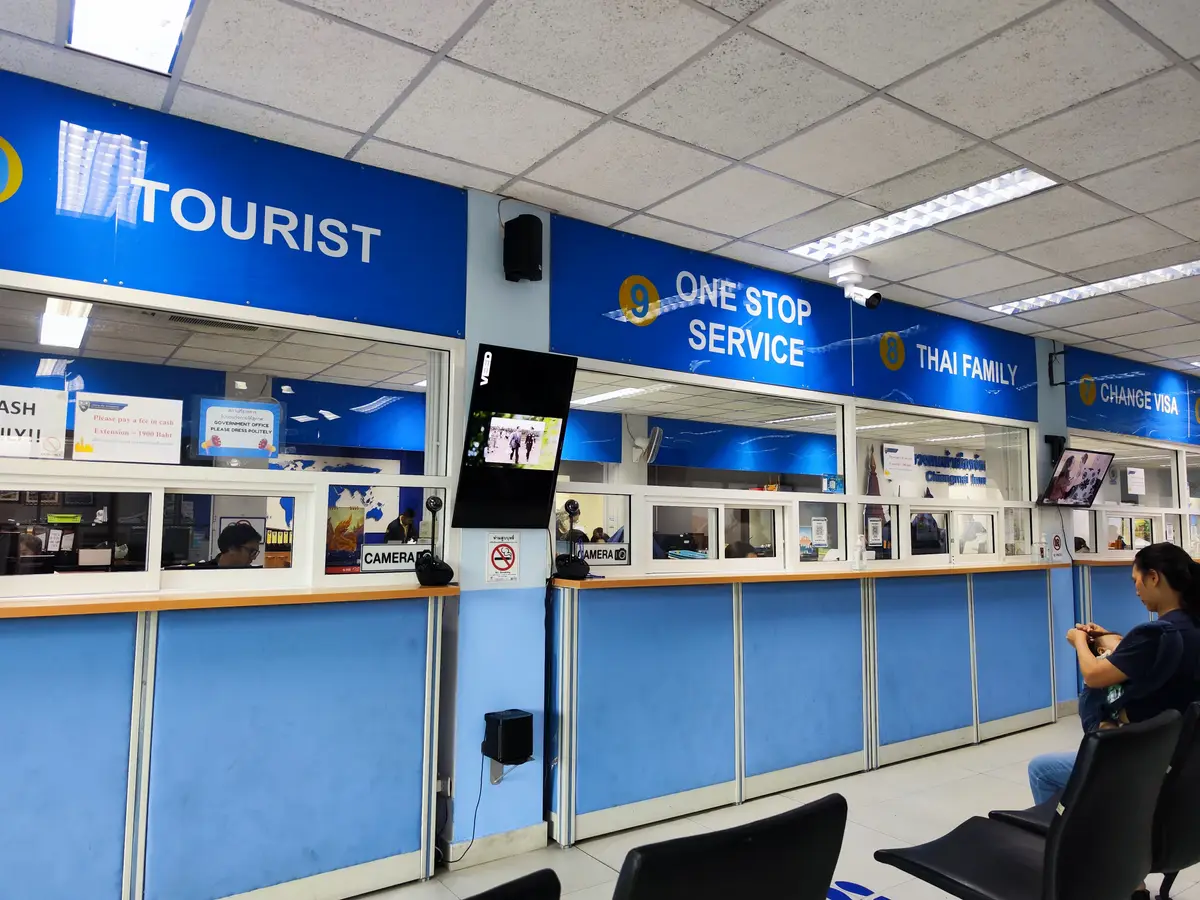
The counters are signed by service, and a waiting hall sits in front of them.
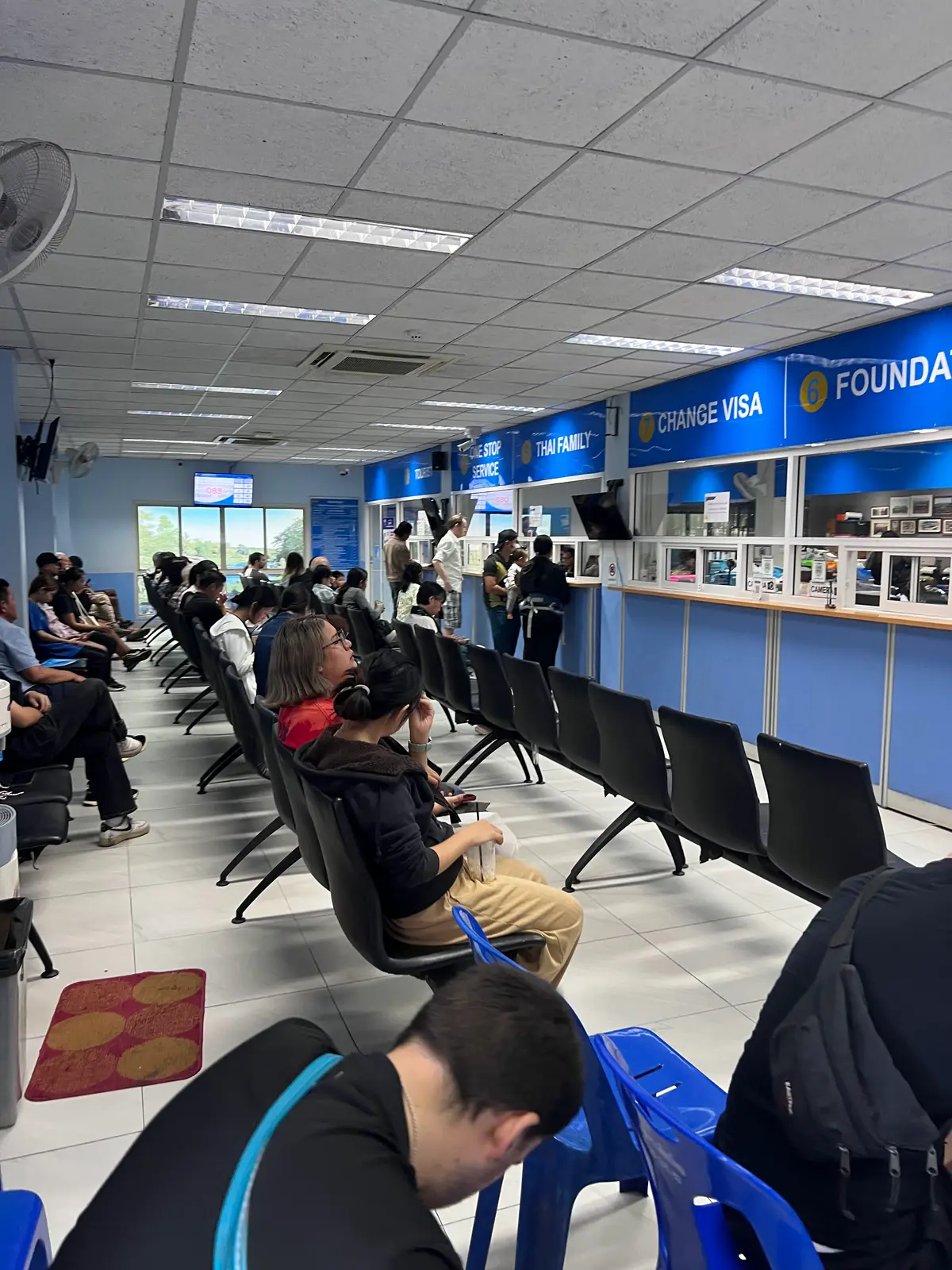
71 ถนนสนามบิน Suthep, Mueang Chiang Mai District, Chiang Mai 50200, Thailand · Open in Google Maps (opens in a new tab)
60 ถนน มหิดล Suthep, Mueang Chiang Mai District, Chiang Mai 50200, Thailand · Open in Google Maps (opens in a new tab)
Photo credits
- Photos and clips uploaded to Google Maps (Chiang Mai International Airport on Google Maps (opens in a new tab), Chiang Mai Immigration Office on Google Maps (opens in a new tab)) by Jordan Kuo, Peter Miller (WHY THAI), IWASAKI SHIGERU, Seline.
Step by step
- Before you flyFile the free TDAC online within 3 days before arrival.
- Day oneReach your accommodation, ask the host to file the TM.30 now, save 191, 1669 and 1155, and use airport Wi-Fi, which runs up to 3 hours through the AOT app.
- Days two and threeBuy a tourist SIM and sort cash; ask the host for the TM.30 receipt.
- Days four to sixInstall Air4Thai and check the northern region report.
- Day sevenWork out your end date, and diarise an extension or the 90-day report window.
Not confirmed: Go to Airport Road or the Central Festival point, not the Promenada mall. Counter hours at Airport Road come from a 2019 handbook, so phone 053 201 755 first.
Reach readers planning life in Chiang Mai. Advertise → hello@chiangmaijao.com
Common questions
What do I file in my first week in Chiang Mai?
The TDAC before you fly. On day one, check the TM.30 address notice, which your hotel or landlord files within twenty-four hours of you taking up residence.
How long can I stay without a visa?
Visa-exempt entry is for tourism, up to 30 days. Entry through land-border checkpoints is capped at twice per calendar year.
How much does a tourist extension cost?
THB 1,900. It adds up to 30 days to a visa-exempt stay.
When is the first 90-day report due?
The duty starts once you have stayed longer than ninety days, so a 30-day visa-exempt stay does not trigger it. Count 90 days from your latest arrival, and file from 15 days before until 7 days after the due date.
What is the overstay fine?
THB 500 per day, capped at THB 20,000, which is reached at 40 days.
Which air-quality app is official?
Air4Thai, run by the Pollution Control Department.
Read next
Places in this guide
General information checked against the sources listed above, not legal advice for your situation. Rules and office practice change; confirm with the immigration office or a licensed adviser before you act. See how guides are checked.
Spotted an error? Report it.